Garden access design determines how easily you can reach every garden bed, tap, and fence after the work is complete. Many people focus on how their garden looks from the back door but forget to plan for mowing, pruning and moving bins.
Since 2002, Peninsula Compost has helped homeowners improve their gardens through expert landscaping and renovation services. Our skilled team creates outdoor spaces that suit each client’s style, needs and budget, with a focus on quality work and clear communication.
This guide explains why garden access gets overlooked and gives you six checks to run before approving a design. You’ll also learn the right path widths for people and garden tools, plus simple ways to make small gardens easier to use.
Why Does Outdoor Access Get Overlooked During Garden Landscaping?

Most garden plans get approved from a drawing or a view from the patio. Neither shows what it’s like to push a mower down the side path. A garden can look beautiful from the kitchen window and still have paths that make pruning and weeding difficult. The problem often becomes clear when you need to reach a garden bed or the back fence.
Plants then make the problem worse with time. For example, if a shrub sits neatly at planting, it can grow wide enough to close a path the plan shows as open. That’s why plant selection needs the mature width from the label, and the drawing should show each plant at that size.
Hard landscaping causes a different problem, because retaining walls, raised beds and new paving create changes in ground level. Even one step can make it hard to move a wheelbarrow or wheelie bin.
These problems often start with small design choices rather than one major mistake. An extra planter, built-in seating or a narrower side path might seem harmless on its own.
However, each change takes up space and leaves less room for everyday garden tasks. Anyone who adds compost to their garden beds every autumn knows how a narrow path can turn a quick job into a long afternoon.
Running the Six Access Checks Before You Sign Off the Garden Design Plan
Once you understand what causes access problems, you can check the garden plan before work begins.
The six checks below will help you identify common issues with paths, garden beds and working space. You’ll only need your plan and a tape measure.
Garden Bed Access for Easier Plant Care and Maintenance
Every garden bed should be narrow enough for you to reach its centre from the edge. Stand at the planned edge and stretch out your arm. If you can’t reach the middle, you’ll need to step onto the soil to tend the plants.
Poor access can also damage the soil in your garden beds. Every step compacts the soil, which leaves less room for air and makes water pool on the surface.
For wide beds along a fence, add stepping stones behind them so you can reach the plants without walking on the soil.
Can a Wheelbarrow and Mower Still Get Down the Side of the House?
A side path needs enough room for your wheelbarrow and mower to pass through comfortably. Measure both at their widest points, including the handles, then check that the gap beside your house is wide enough.
Remember to account for anything that takes up space along the side path. Downpipes, hose reels and air-con units can narrow the gap (and most plans don’t show them at all). A full barrow of compost also needs extra room because it takes up more space and can sway as you push it.
If the path is too narrow, move the obstruction on the plan before construction begins. You can also choose a narrower wheelbarrow if moving the obstruction isn’t possible.
Taps, Bins and Meters Need to Stay on a Clear Route
Garden taps, bins and meter boxes should sit right beside a path. That way, you can reach each one without stepping into a garden bed or trampling plants.
Your electricity and water meters need that clear path on every visit, since meter readers must reach them easily. We recommend keeping dense plants and locked gates away from these routes, as a blocked meter can lead to missed readings.
Bins are the only item here that has to travel, so they need a direct run from their storage spot to the kerb. Mark each one at full size on the plan and trace its trip out on collection day. Any steps or tight turns along the way will slow you down every week.
Where a Ladder Has to Stand for Fences, Gutters and Trees
Have you planned enough space to place a ladder safely around your garden? A ladder needs firm, level ground and enough room to rest at a safe angle. Garden beds, loose mulch and sloping lawns don’t provide a stable base.
The risk is serious, too. ACCC Product Safety’s ladders guide reports that, on average, more than 30 Australians, mainly men, die each year after falling from a ladder.
To make ladder access easier, mark a flat, firm spot near each fence, gutter and tree that needs regular care. You can set a few pavers into the garden bed to create a stable base without losing much planting space.
Gates That Still Open Fully Once the New Paving Is Down
New paving can raise the ground level and leave too little space beneath a garden gate. As a result, a gate that once opened freely can catch on the paving. Check the planned paving height against the bottom of each gate to allow enough clearance.
Ground clearance isn’t the only thing to check. You also need enough room for the gate to swing open fully (mark its full arc on the ground before paving). A planter, bin or pot in its path could stop the gate from opening wide enough for your mower.
If the paving sits too high, ask your landscaper to lower it near the gate. You can also have the gate rehung at a higher level.
Does the Route Work at Night and After Rain?
When a garden route has a non-slip surface and good lighting, you can use it safely at night and after rain. Smooth stone and timber decking can become slippery when wet or covered in moss, so main paths need a textured finish for grip.
The path also needs proper drainage to carry rainwater away. Standing water softens the soil along the edges and can cause the path border to crumble.
Once the surface and drainage are sorted, turn to lighting. Low lights near steps, level changes, gates and seating areas help you see path edges and avoid obstacles in the dark. Then walk the path on a wet evening and fix any spots where you struggle to see or keep your footing.
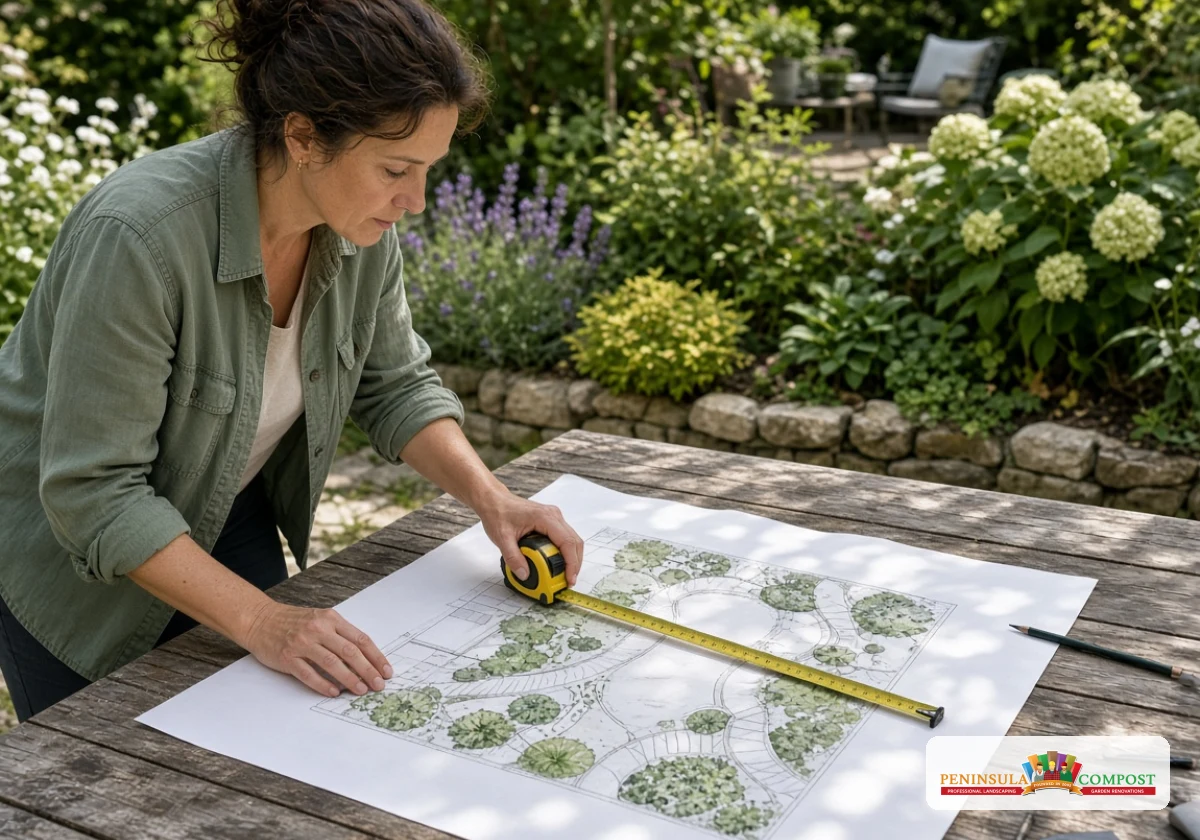
Landscaping Pathway Clearance: Widths That Work for People and Tools
Once you’ve checked access around the garden, it’s time to look at path widths. The right width will give you enough room to walk comfortably and move garden tools without hitting plants along the edges.
The table below shows suggested path widths for people and garden tools.
| What Needs to Pass | Clear Width to Plan For | What Happens If It’s Tighter |
|---|---|---|
| One person on foot | Your shoulder width plus a hand span each side | You brush wet foliage and step onto beds to pass |
| Wheelbarrow or wheelie bin | The widest point, handles included, plus room for your knuckles | Handles scrape fences and loads tip on corners |
| Push mower | The deck width plus space to turn at each end | You lift the mower over edges and scalp the lawn |
| Two people, or one with a trolley | Two shoulder widths side by side | Deliveries and furniture moves need a second route |
Plan each path around the widest equipment you’ll need to move through it. Then allow extra space along the edges for plant growth (even small plants like lavender spread further each spring). This extra clearance keeps the path wide enough for garden tools and everyday use.
Outdoor Spaces in Small Gardens: Common Access Problems and Simple Fixes
Small gardens often have less room for wide paths, so even one extra planter can block access to the back. HIA’s 2025 analysis of the HIA-CoreLogic Residential Land Sales Report found that the median capital city lot size was 391m² in late 2023. That figure marked a drop of 11.1% since 2013 and 33.8% since 2003. HIA’s 2025 report links that shrinking land to homes getting smaller as well.
In a small garden, one path often needs to serve several purposes because there’s little room for extra routes. You’ll use the same path to move your mower, take out the bins, receive deliveries and carry a ladder.
However, pots and other items can easily block this shared route. Careful placement helps you keep the path clear and use your outdoor space well.
The following fixes will keep paths clear without losing planting space:
- Raised Beds on Legs: These beds leave open space underneath for simple garden care. You can sweep away leaves and mow the grass without edging around solid sides. A height around hip level lets you reach underneath without bending.
- Vertical Gardening on Walls: Wall-mounted planters keep the ground clear for everyday use. They also free up narrow paths that need to fit garden tools. If you fix them to a sturdy wall clear of doors and windows, they’ll stay out of every route.
- Fold-Down Benches: Wall-mounted benches fold flat when you need the path clear. They give you seating without a permanent footprint. Fit one where the path is widest so it never blocks a barrow.
- Wall-Hung Hose Reels: A wall-mounted hose reel keeps hoses off the ground and out of the way. It also frees up space along narrow side paths. A spot right beside the tap keeps the hose short and tidy.
- Containers on Castors: Pots with wheels make it easier to move plants when you need extra space. Lockable castors keep containers in place during everyday use. Choose sturdy wheels that can support each pot’s full weight.
You should start with the two fixes that will clear your busiest garden path. Before planting, push a loaded wheelbarrow along the route to check for tight spots. You’ll find access problems simpler to fix while the garden is still under construction.
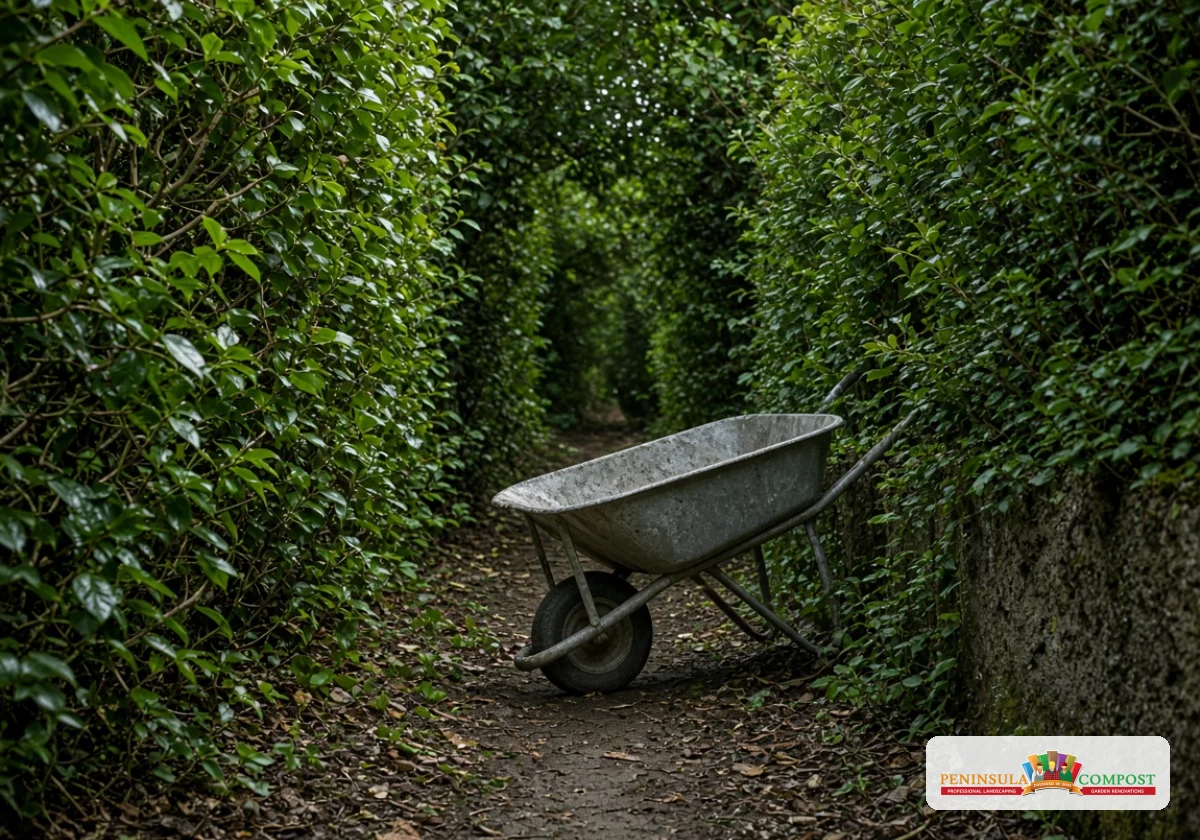
Walk the Garden Before You Sign Off the Plan
Good garden access design comes from testing every route on the plan before anyone builds it. A layout that only looks right from the patio will cost you time on every mow, prune and bin night.
Print the plan, grab a tape measure and walk each route with your barrow and mower. Mark every pinch point and ask for changes while they still cost nothing.
If you need expert advice on your garden layout, our team at Peninsula Compost can guide you through the planning process. Contact us to discuss your ideas and create a garden that’s easy to access and maintain.