Retractable pergolas work better for spaces that need flexible shade and airflow, while fixed structures suit constant weather protection. One option moves with the weather, and the other holds firm against it.
Most buyers get stuck here because both builds look almost identical in a brochure photo. The difference shows up later, when you’re under the roof on a wet Sunday. At Peninsula Compost, we offer pergola and landscaping services that help homeowners plan outdoor spaces around their needs.
This guide covers how a louvred roof works, when a permanent build suits you better, and what each one asks of you over time. You’ll also see how to match a product to the way you use your outdoor area.
Retractable Pergolas Put You in Control of Sun, Shade and Rain

Most homeowners don’t realise a louvre roof pergola can shift from open sky to full cover in seconds. That one feature changes how a patio works across a whole day, because you set the conditions instead of working around them.
The three parts below cover the mechanics, the daily comfort, and what an opening roof does when the weather turns:
How Louvred Pergola Roof Systems Work
Aluminium louvred pergolas have rows of adjustable slats, called louvres, that pivot inside a fixed frame. With a motorised louvred pergola, you control the slats using a remote, so there’s no need for a ladder or manual handle.
From there, the angle of the louvres decides everything else. Closed flat, the slats lock together and send water into hidden gutters inside the posts. Motorised louvred roofs can close before rain arrives, and some models include rain sensors that operate the slats automatically.
Adjustable Shade and Airflow Throughout the Day
Open louvres suit the morning, when you want natural light and warmth on the table. By midday, a partial tilt blocks direct sun while hot air still escapes upward.
You’ll notice the difference on a still February afternoon, when air sits heavy under a solid patio cover. Tilting the slats drops the temperature without closing the space in.
Awnings shade a deck from the wall outward (great over a west-facing window that cops afternoon sun). Yet, they can’t move the air above your head.
What Happens to Pergolas and Awnings When the Weather Turns
Closed louvres give you proper protection from the elements, including the rain that ends outdoor dinners. Water runs off the slats and away from your seating. High winds test the frame instead, so check the model’s wind rating and how it’s anchored. Fabric canopies ask more of you, since you retract them before a storm arrives.
Retractable systems protect on demand, though most still need a glance at the forecast unless your model has sensors. If you’d rather not think about that, the next section is yours.
When Does a Fixed Outdoor Structure Make More Sense?
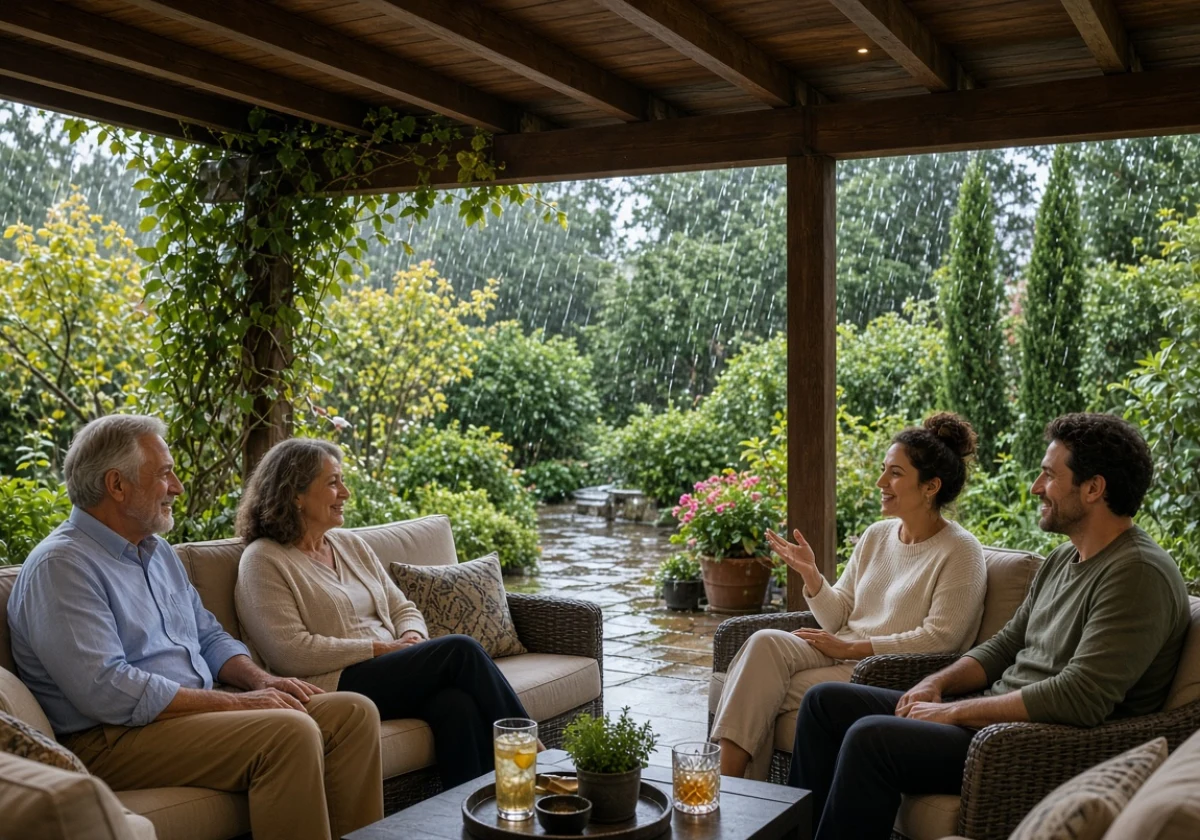
A fixed outdoor structure makes more sense when you want constant cover and low maintenance. Nothing up there moves, so you never have to operate, service, or remember anything before you leave home.
Here are three reasons buyers often prefer fixed-roof pergolas:
Constant Protection from Rain and Harsh Sun
A fixed pergola covers the same area in every season, which suits a patio you also use for storage. You switch nothing on before a storm hits.
Through summer, an insulated patio roof cuts the heat coming through the sheeting above your head. Constant shade and protection also slow the fading of outdoor furniture and timber decking underneath.
Reliability like that suits families who entertain often (the barbie runs rain or shine, guests and all). In practice, permanent rain protection gives a patio the year-round usability an outdoor room needs.
Lower Upkeep with No Moving Parts
With no motors, tracks, or slats, a fixed structure gives you almost nothing to service. You’ll clear gutters after leaf drop and check the fixings, and that’s it.
Moving parts cost money over time, because motors, seals, and the fabric on retractable awnings all wear out. If you’re the sort who forgets to bring the bins in, that simplicity counts.
Over time, repairs to motors or seals may add to the cost of an adjustable roof, depending on the system and its condition. Plenty of owners pick the simpler build for that reason alone.
Pergola Design Styles That Suit Fixed Roofs
Permanent builds suit homes with strong rooflines, because the new structure can follow the pitch of the house. On most jobs, the existing roofline decides the pergola design more than taste does.
Timber beams sit well against older weatherboard homes, while flat aluminium roofs suit rendered modern facades. Polycarbonate panels let daylight through where a solid roof would darken a kitchen window.
Beyond aesthetic appeal, a fixed roof gives you fixed points for lighting, fans, and an outdoor kitchen. Those fixed points are what separate proper outdoor living spaces from a patch of shade.
Retractable Pergola vs Fixed Structure: Comparing Cost, Upkeep and Everyday Use
With both builds clear, a quick side-by-side comparison makes it easier to match each option to your budget and lifestyle. Run your eye down the columns and see which side your priorities land on:
| Factor | Retractable pergola | Fixed Structure |
|---|---|---|
| Upfront cost | Higher, since motors and retractable roofing add engineering cost | Often lower for comparable basic designs |
| Upkeep | Checks on motors, seals and louvres | Cleaning, gutter clearing and fixing inspections |
| Everyday use | Adjustable shade and sunlight | Consistent overhead cover |
| Best suited to | Spaces needing flexible shade | Spaces needing regular cover and lower upkeep |
When your weekends change with the forecast, the moving roof earns its price. Steady weekends point the other way, and the fixed build gives you more covered area for the money.
How to Choose Between Patio Solutions for Your Outdoor Space

Start with how you plan to use the space, then check your local council’s requirements before choosing a pergola. Work through these three checks before you ask anyone for a free quote.
- Daily Use Pattern: Count the hours you spend outside in a normal week, then note what sends you back indoors. Heat and shifting sun point to a tilting roof, while constant rain and low upkeep point to a solid cover.
- Approvals and Siting: Pergola approval rules differ across Australian states and councils. For example, in NSW, some pergolas qualify as exempt development if they meet specific conditions. Check your local requirements before construction.
- Materials and Climate: Your local climate affects how much care each material needs. Powder-coated aluminium still needs cleaning near the coast, while timber may need regular oiling to maintain its colour. Fabric awnings also fade with sun exposure, so check what the warranty covers.
Write your answers down before you talk to a supplier. You’ll have a clearer way to judge each quote against your needs rather than the sales pitch. Use your answers to narrow the options, then confirm the design meets local requirements and suits your budget.
Ready to Get More from Your Outdoor Living Area?
Retractable pergolas win when you want control over sun, shade and airflow through the day. Fixed structures win when you want cover that asks nothing of you.
Measure the area, check your approvals, and be honest about how often you’ll use the roof. That answer points to the right build more reliably than any showroom visit.
Peninsula Compost can help you prepare the garden around your new structure. Contact the team before your project starts so you plan the groundwork once.