You can make your outdoor space more inviting by arranging furniture for conversation, adding lighting, and including features people enjoy. Sounds like a lot of work?
Here’s the good news: you don’t need a complete renovation. A few strategic tweaks to your layout and furniture placement typically resolve the issue. And we know exactly which tweaks work.
At Peninsula Compost, we’ve helped dozens of Australian families turn their rarely-used outdoor spaces into everyday favourites. In this guide, you’ll learn the arrangement tricks, lighting setups, and small features that actually pull people outside.
Let’s begin with getting your furniture placement right.
How to Arrange Furniture for People to Sit Down
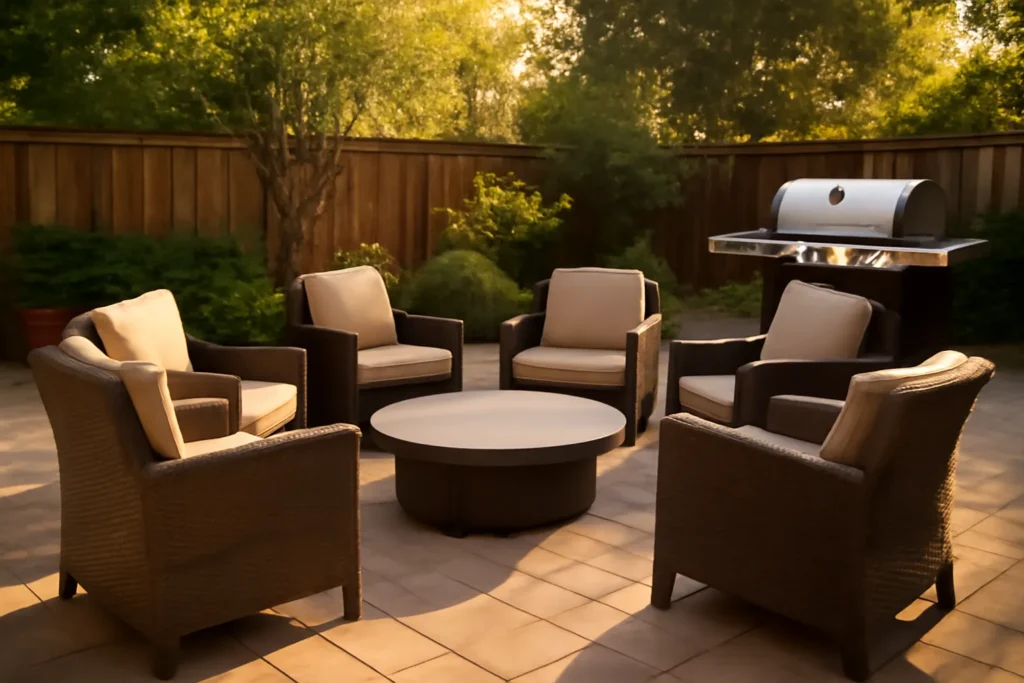
Arrange your furniture to create small conversation zones where people face each other, not walls. Three simple adjustments help with that.
Turn Your Barbecue Around
Right now, your cook probably stands at the grill with their back to everyone, trying to have conversations over their shoulder. Nobody wants to chat with someone’s back for an hour.
The solution? Just flip it around and position your outdoor kitchen so the cook faces toward the seating area. This helps them feel part of the group without smoke drifting into everyone’s faces.
Arrange Seating That Faces Inward
Chairs and lounges work best in a circle or U-shape. This creates a natural conversation space where everyone can actually see each other and talk without shouting across the deck.
Also, mix in some built-in seating with movable chairs if you can. That way, you’ve got flexibility for different group sizes.
Create Clear Pathways Between Zones
People need obvious walkways between cooking, dining, and lounging areas. Without it, guests end up doing an obstacle course with plates and drinks. And when furniture’s crammed edge-to-edge, your outdoor area feels tight and people drift back inside.
Don’t forget about the entry point, either. The pathway from your house door to the seating area should be straightforward, too.
Bottom line: make the journey easy, and people will actually use the space.
How to Light Your Outdoor Space So People Stay After Dark
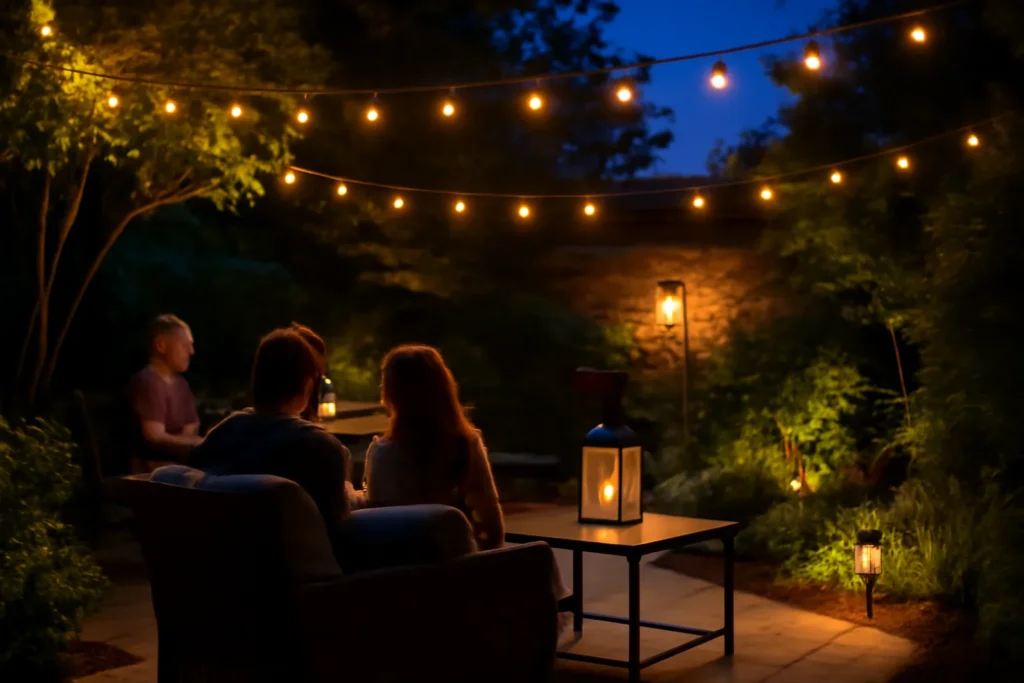
Your outdoor area needs three different types of light working together, including ambient lighting, task lighting, and accent lighting. Lighting also affects how people feel in the space. According to the US Department of Energy, proper outdoor lighting affects sleep quality and well-being.
So let’s get this right.
Layer Your Lighting at Three Heights
String lights overhead are your starting point. They create a warm ambience without harsh glare, turning your patio into somewhere cosy instead of clinical.
Next, add task lighting at eye level. Lanterns on tables or walls give people enough light to eat and chat comfortably. The trick? Position them so they light faces without shining directly into anyone’s eyes.
Low garden lights at ground level finish the look. So place them near plants or along garden edges. Suddenly, your outdoor space has a subtle resort-like vibe, with depth and shadow that feels inviting.
Light the Path from Door to Seating
Beyond the main entertaining area, you need to think about the journey outside. That hesitation when it’s dark and you can’t quite see where you’re stepping? Solar path lights along the walkway solve this. They turn evening trips outside into something that feels safe and inviting.
Steps and level changes are trip hazards waiting to happen, especially after a few drinks at a gathering. So these spots need clear illumination.
Now, what about bulb colour? Outdoor lighting affects your melatonin levels and sleep quality, so it’s an important factor to consider. Warm white creates a welcoming glow that’s easier on your circadian rhythm. Cool white, on the other hand, feels like you’re sitting in a hospital waiting room (nobody’s idea of a relaxing Saturday evening).
Once you’ve got lighting sorted, the next challenge is making sure the Australian sun doesn’t drive everyone back indoors.
Year-Round Shade That Actually Works
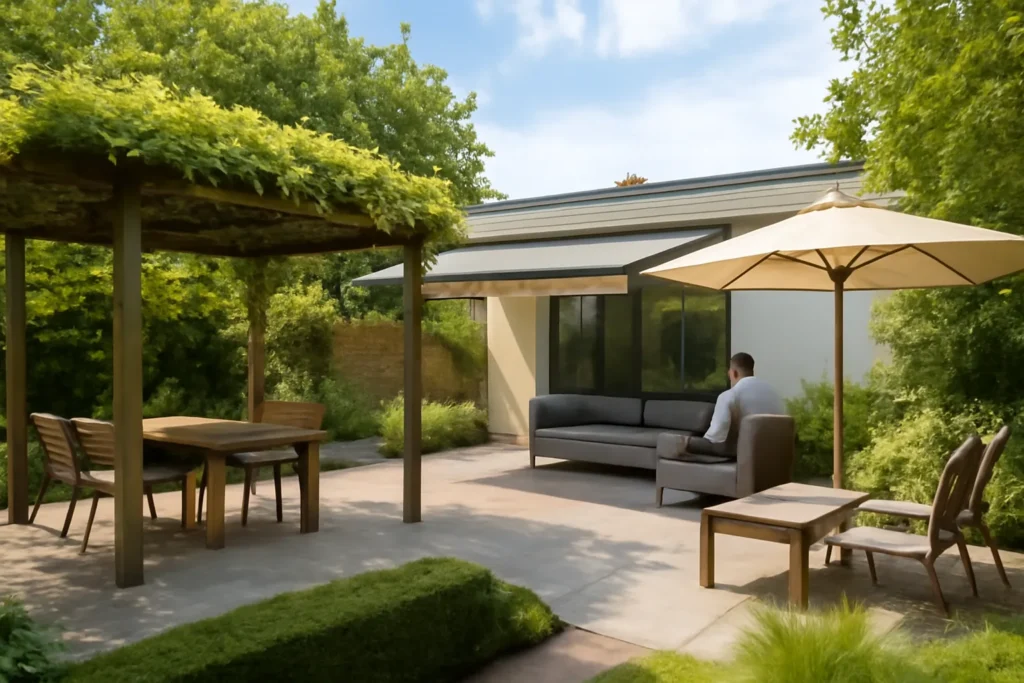
The right shelter keeps your space usable all year, regardless of the weather conditions. Here are four options that work well, depending on your budget and setup.
- Pergola with Climbing Plants: Perfect if you’re looking into the future. It takes 1-2 years before those vines create proper shade, but once they do? You’ve basically grown your own living roof that looks better every year. The plants adapt to local conditions and create beautiful dappled shade that changes with each season.
- Retractable Awning: Instant coverage when you need it, adjustable for different weather. The upfront cost runs higher, but you get versatility. Extend it during summer heat and retract it in winter when you want the sun to warm the patio.
- Large Market Umbrella: Budget-friendly and immediate. Provides shade you can move between different zones as the sun shifts. Just make sure you’ve got a secure heavy base (Australian wind will turn that thing into a sail otherwise).
- Shade Sail: Clean, modern look that blocks up to 95% of UV rays. The only downside? It needs proper anchor points and professional installation. But once it’s up, you’ve got cost-effective shade that suits contemporary gardens particularly well.
Each option has trade-offs between cost, flexibility, and permanence. So choose based on how much sun your garden gets and whether you prefer something that blends into the planting or makes a statement.
The Missing Elements in Under-Used Patios
Most patios stay empty because they are missing simple, practical features like garden beds, a focal point, storage, and side tables. Let’s take a look at how each one can make your outdoor space more inviting.
Plant Herb and Vegetable Garden Beds
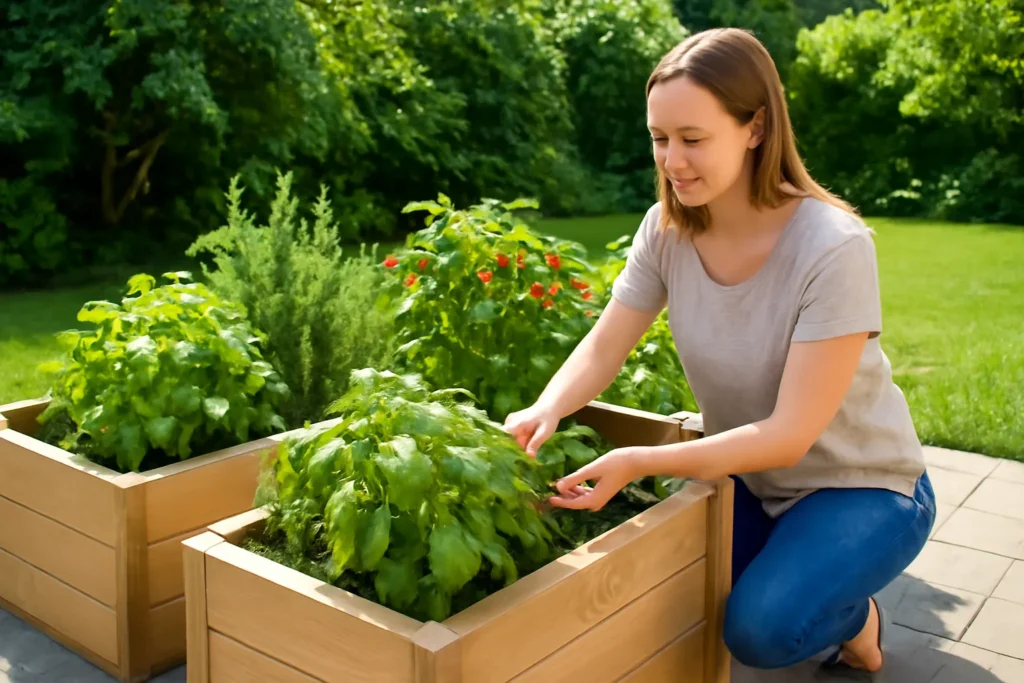
Edible gardens give you a genuine reason to step outside daily. Fresh rosemary, basil, or cherry tomatoes are right there when you’re cooking dinner.
Raised garden beds frame your patio while providing fresh food just steps from where you cook. The height makes maintenance easier, too. Even a small productive garden creates a living focal point that changes with each season.
Here’s the thing: herb gardens get used daily. Expensive water features mostly collect leaves.
Add One Standout Focal Point
A single beautiful feature draws the eye and gives your patio real personality. Think water fountain, fire pit, or sculpture. These features each bring something unique to your space.
For example, a fire pit gives people a place to gather on cooler evenings. A fountain adds soothing background sound and makes the area feel more private.
It’s important to position your focal point where it is visible from indoor living areas. That way, your patio naturally tempts you to step outside throughout the day.
Include Quick-Access Storage for Cushions
You know how cushions always end up stuck in the garage under camping gear? Weatherproof storage benches near seating mean cushions come out easily. And if getting cushions out takes ages, they’re not coming out.
Built-in deck boxes can double as extra seating while storing throws, pillows, and outdoor games. When cushions take 30 seconds to retrieve instead of a major expedition, people use the area spontaneously. That’s the difference between “let’s sit outside” and “eh, too much hassle.”
Position Side Tables in Your Seating Area
We’ve all had that awkward moment when everyone is juggling drinks and phones with nowhere to put them down. Well, side tables within easy reach make it simple for everyone to relax and enjoy the space.
Without convenient surfaces nearby, guests either hold everything uncomfortably or give up and head back inside, where there are proper tables. You don’t even need expensive furniture for this to work, budget options from hardware stores do the job fine.
What Actually Changed in These Real Backyards
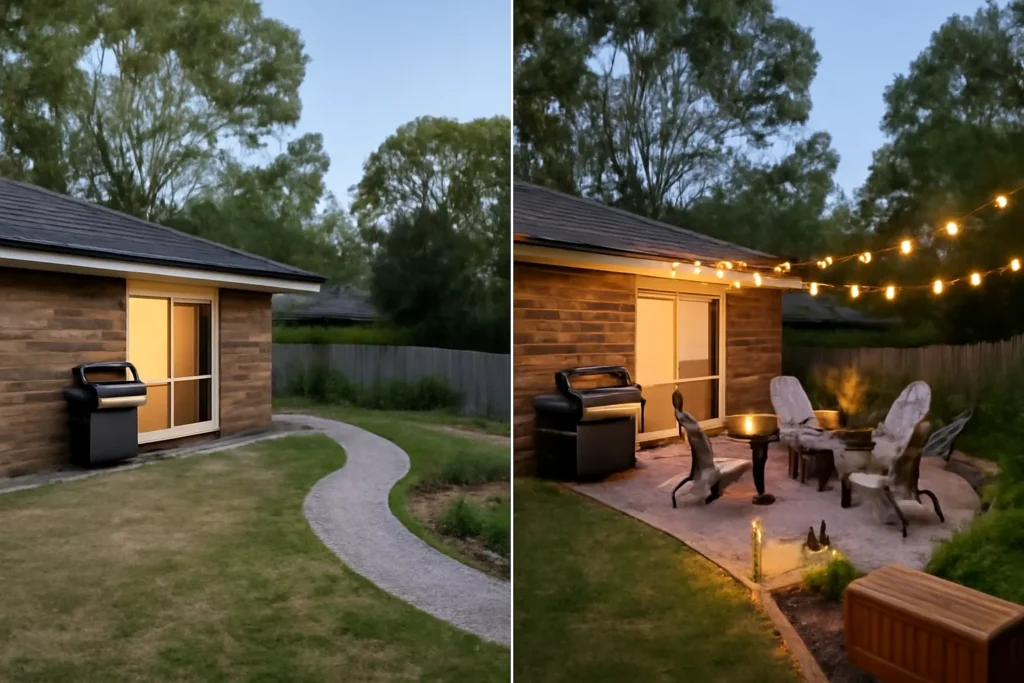
Planning ideas is one thing, but seeing them in action is another. When Australian families added these simple features to their patios, the results spoke for themselves.
Example 1: One family in Frankston had a beautiful setup that nobody used. The cook always faced away from everyone at the barbecue, isolated from the group.
The fix: We moved their barbecue just a couple of metres and repositioned four chairs into a conversation circle. Suddenly, they were using the patio three times weekly instead of once a month.
And the total investment? Moving furniture that they already owned. No major garden redesign, no expensive purchases.
Example 2: Another family’s area sat completely empty after sunset because it was too dark. Adding string lights overhead and pathway lighting along the walkway from their back door cost under $200.
Now they host regular Friday night gatherings, and neighbours have started coming over. The owner later said he wished they’d done it years ago.
Example 3: A third project involved a deck that looked nice in photos but gave people no reason to visit. Installing a weatherproof storage bench made cushions easily accessible, and a small herb garden near the outdoor kitchen gave them something to tend daily.
The deck went from rarely-used to the family’s favourite breakfast spot every weekend morning. She’s out there daily now, growing tomatoes, basil, and mint.
None of these involved major construction, just simple layout adjustments and giving people a reason to go outside.
Getting Your Outdoor Space Actually Used
Your outdoor area should work as hard as your indoor living spaces. When the layout encourages conversation, the lighting feels welcoming, and there’s something worth visiting, people naturally spend time outside.
You now know how to arrange furniture for conversation, install lighting that works after dark, add weather protection for year-round use, and include features that pull people outside daily. Start with one or two changes and build from there.
Want help turning your unused outdoor area into a space you’ll actually use? Peninsula Compost has been transforming Australian outdoor spaces since 2002. Get in touch to get started.