Your backyard should feel like somewhere you actually want to spend time, instead of another chore you deal with on the weekend. Most people jump straight into picking plants or buying furniture without thinking about how they’ll actually use the space. That’s why a lot of gardens look great but never really get used.
In reality, a good garden design starts with your real habits. For instance, if you have your morning coffee on the back step, you probably want that spot to feel nicer than a straight view of the lawn. And when the kids need space to play, the layout should help with that instead of adding to the workload.
You also need to think about the coastal reality of the Mornington Peninsula. The salt air, sandy soil, and unpredictable weather mean you can’t just copy any garden design you see online.
This guide shows you how to choose garden beds that suit your lifestyle, which outdoor living trends to pay attention to in 2026, and what furniture holds up in coastal conditions.
Let’s begin with the foundation (no pun intended).
What Makes Garden Design Feel Personal in 2026?
Garden design becomes personal when it’s built around your daily habits, family needs, and the specific conditions of your property.
The best approach starts by asking how you move through your backyard, what time of day you’re outside, and what activities happen most often. Once you understand those patterns, everything from path placement to plant selection becomes easier because it removes the guesswork.
Next, think about the routines that shape your day. One of our clients had an elderly dog who struggled with full sun, so their design started with a shaded spot close to the house. They often cooked, so herbs went right near the kitchen door to save them from walking across wet grass. And because they hosted friends on weekends, the fire pit was moved to the opposite side of the house to keep noise away from the bedrooms.
However, knowing what you want only works if your property can support it. That’s why a proper site assessment examines soil quality, sunlight patterns, drainage issues, and existing features before plants or materials are selected.
Without that groundwork, you end up with expensive mistakes like sun-lovers planted in shade or furniture blocking your only decent view.
Garden Beds That Match Your Lifestyle and Space
Once you’ve mapped out how you’ll use your outdoor sanctuary, the next decision is what type of garden beds suit your setup.
In-ground beds suit larger properties with good soil quality and time for regular maintenance. They blend into the landscape and give roots unlimited growing room. That extra space also works particularly well for established trees, large perennials, and sprawling natives that need room to spread.
Compact courtyards need strategic bed placement that provides enough growing space without overcrowding walkways. Narrow border beds along fences or walls work best here as they keep the centre open for furniture while making planting easier to manage.
Choosing the right bed style also depends on your gardening experience and how much upkeep you can handle. While some people prefer low-effort setups they can reach easily, others enjoy tending larger spaces.
From our experience, beginners usually start with one or two well-placed beds instead of committing to big areas that are tough to maintain.
Why Raised Garden Beds Work for Australian Backyards
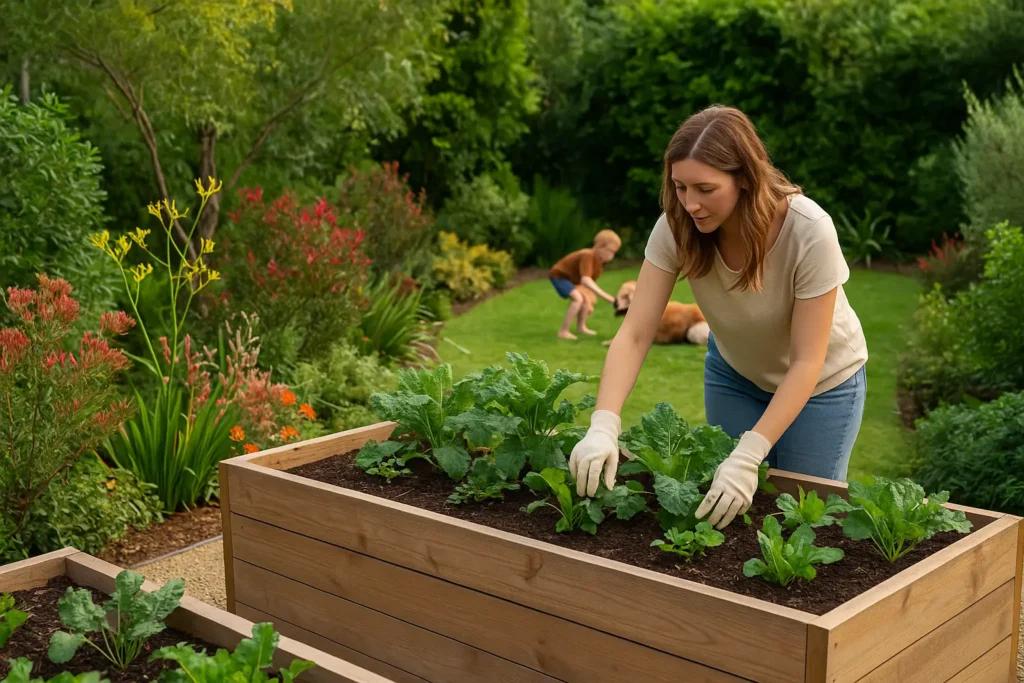
Raised garden beds work because they give you better drainage, easier maintenance, and complete control over soil quality without the physical strain of ground-level gardening. We’ll break down each point in this section.
Better Drainage and Soil Control
Raised beds offer better drainage during heavy rain and allow complete control over soil composition. You can fill them with premium soil mix suited to whatever you’re growing, whether that’s acid-loving blueberries or Mediterranean herbs that need excellent drainage.
This way, instead of fighting poor ground soil for years, you start with exactly what your plants need.
Easier on Your Body
The elevated height reduces back strain by cutting down on kneeling and bending. This benefit becomes more valuable as you get older or if joint pain already limits what you can do comfortably. The raised structure also creates a barrier that keeps some ground pests away from plants.
Flexibility for Renters
Raised beds work well for renters or new homeowners who want productive gardens without permanent alterations. You can disassemble and take everything with you when you move, which gives you all the growing benefits without tying you to one property.
These advantages explain why raised garden beds have become the go-to choice for Australian backyards where flexibility and practicality outweigh traditional in-ground planting.
Outdoor Living Trends Shaping Gardens This Year
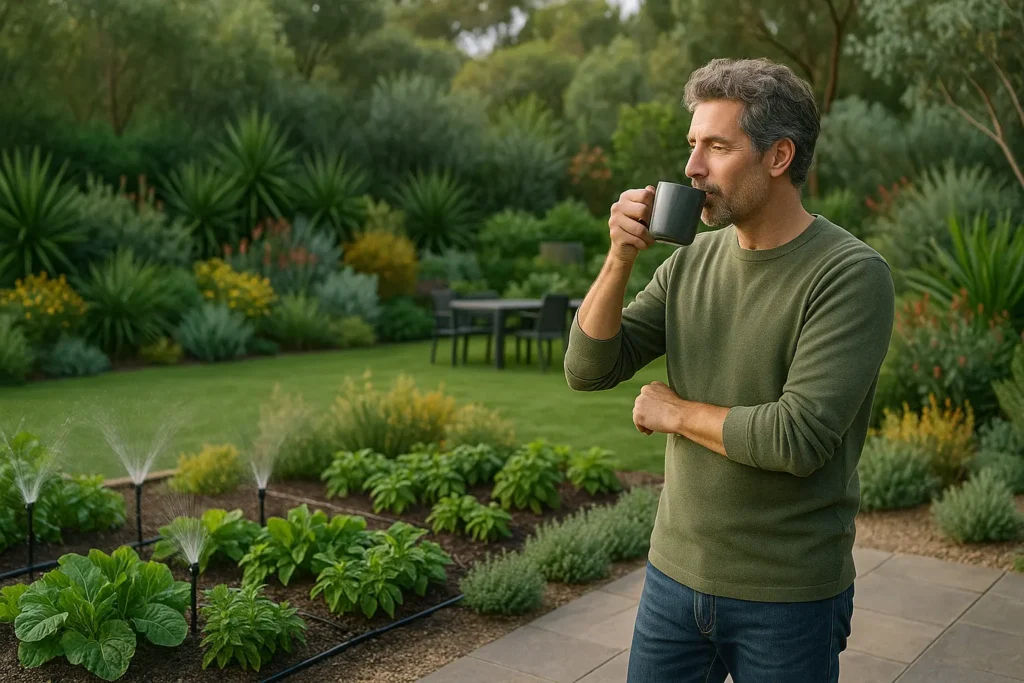
What worked in backyards five years ago doesn’t match how Australian families use outdoor spaces today. So here are three trends reshaping how people design and use their gardens in 2026.
Edible Landscaping
Edible landscaping blends productive plants with ornamental designs. The trick is choosing plants that look good year-round instead of just during harvest.
Dwarf fruit trees are great for this because they flower first, then produce food. Swiss chard brings bright colour to the beds, and strawberries work as a ground cover you can snack on.
Native Plants for Water Savings
If you want a garden that suits Mornington Peninsula conditions, native Australian plants are one of the simplest choices. They can reduce water use by up to 50% while supporting local birds and helpful insects.
Coastal Banksia, Kangaroo Paw, and hardy native grasses grow well in Mornington Peninsula conditions without constant watering. They also cope with local soil and weather, which means less fertiliser, natural pest resistance, and very little maintenance
Multi-Functional Zones
Once your planting is sorted, it helps to think about how each area will work throughout the day. Multi-functional zones let single spaces serve different purposes throughout the day and across the seasons.
For example, the same area can be a play space during the day, a casual dining spot on weekends, and a fire pit corner on winter evenings.
Turning Your Dream Garden Into Reality
Now that you know what’s possible with modern garden design, let’s look at how to move from ideas to actual results.
Step 1: Start Small and Strategic
Start with one focal area rather than overwhelming yourself with complete backyard transformation projects.
Based on our firsthand experience, beginning with an outdoor dining zone or a single raised bed garden works best. You can expand once you see what fits your schedule and what you actually enjoy maintaining.
Step 2: Plan in Stages
Staged plans spread costs and labour over months or even years instead of demanding everything up front. For example:
- Phase one: soil improvement and basic beds.
- Phase two: furniture and pathways.
- Phase three: advanced features like irrigation or lighting.
Once you set it out this way, each phase feels manageable, and your garden has time to settle between additions.
Step 3: Invest in Foundations
Good soil preparation and quality compost give your garden the base it needs to grow well. Healthy soil improves water retention and nutrient levels, helps plants settle faster, and cuts down on long-term maintenance.
Outdoor Furniture That Complements Your Space
After you’ve sorted your planting beds and layout, furniture placement can make or break your outdoor living experience.
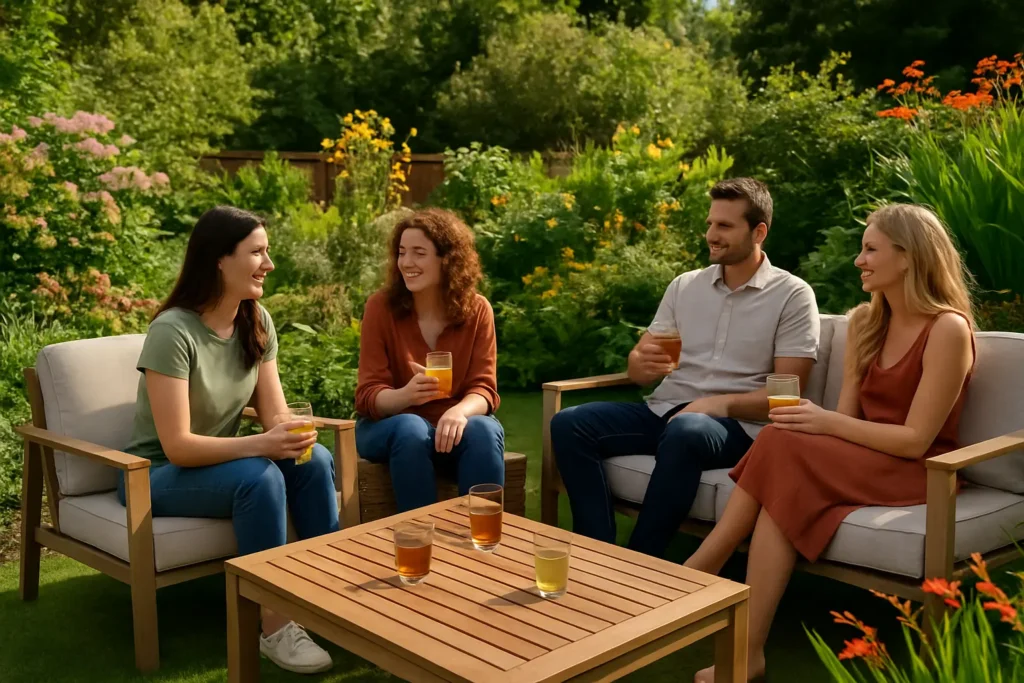
Choose furniture that matches the size of your garden instead of relying on showroom proportions. That massive eight-seater at Bunnings might catch your eye, but think about how it will feel in a compact courtyard.
Pick materials that can handle the Mornington Peninsula weather as well. Powder-coated aluminium and treated hardwood last far longer in the salt air than cheaper options (you might save money at first, but the coast is brutal on budget furniture).
As you set everything out, angle your seating towards your nicest plants or water features. Then check you have enough room to move around. Leaving about 90 centimetres around the table keeps people from squeezing past chairs.
Your Garden Sanctuary Starts Here
Creating a garden that truly feels like your sanctuary begins with knowing how you use your outdoor space. Once you know that, choosing the right beds, furniture, and plants becomes straightforward rather than overwhelming.
Peninsula Compost has been helping Mornington Peninsula families build functional outdoor spaces for over 20 years. If you are ready to start your own garden project, visit our site for practical advice and support.