Outdoor spaces become part of your everyday lifestyle when you design them around daily habits like meals, rest, and entertaining. A patio you walk past each morning stays empty until it holds something you need.
Plenty of households treat the backyard as a weekend job, so it never earns a place in the weekday routine. We see this at Peninsula Compost all the time, and tired soil is often where a neglected garden starts to fail.
This guide covers how to zone your space, which furniture handles the weather, and how planting pulls you outside. You’ll also see how to match outdoor features to the way your household really lives. Let’s get into it.
What Does Good Outdoor Living Design Look Like Day to Day?
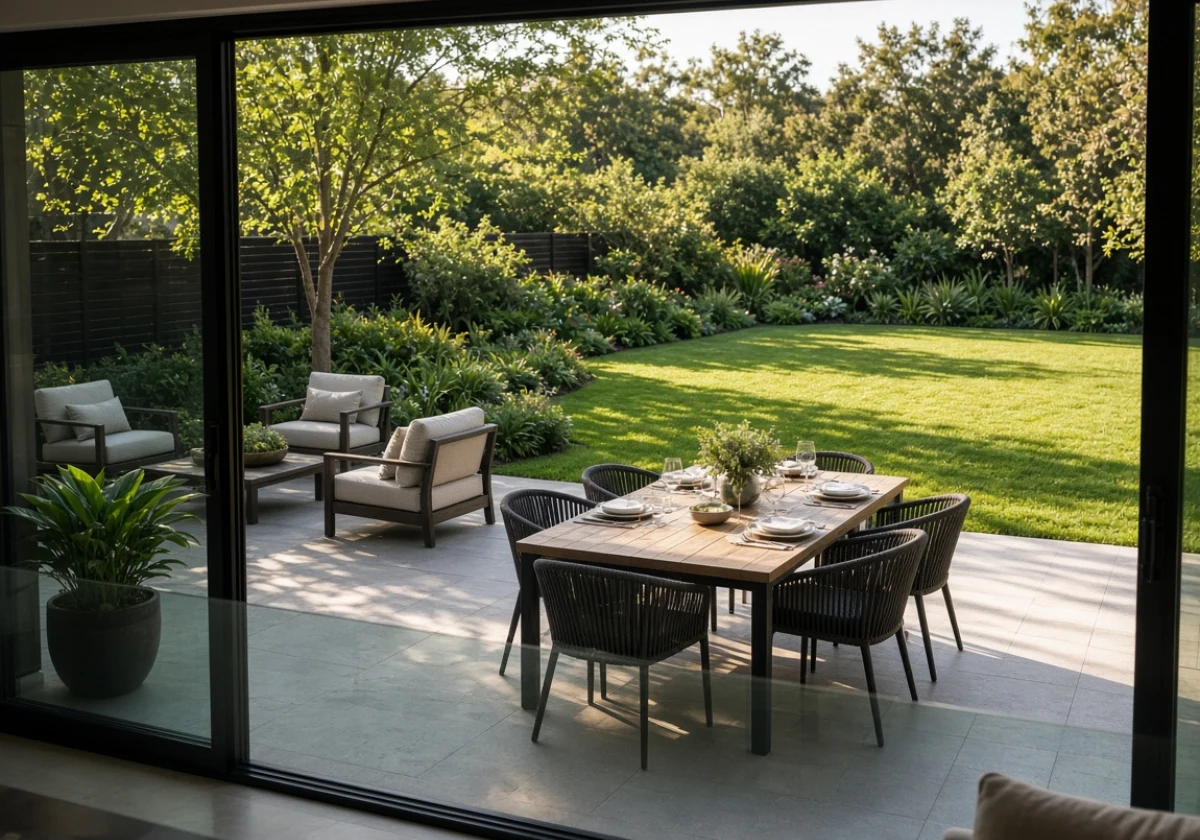
Good outdoor living design fits what your household already does after work and on weekends. Three decisions carry most of the weight here: how you zone the area, what you sit on, and what you put overhead.
Zoning Your Outdoor Rooms for Meals, Rest and Play
Zoning gives each part of the backyard a single job, so the gathering space and the quiet corner never compete for the same square metres. Meals need a table near the back door, which is why dining areas work best within a few steps of the kitchen.
Rest wants the opposite, so your lounge chairs belong in a quiet corner that faces the garden instead. Play takes the leftover lawn, where kids run without crossing the table (fewer spilled drinks and far fewer trodden chip bowls).
Walk the route between the back door and each zone before you commit to paving. If a path crosses your seating areas, move one of them, because people drift to the shortest line between two points.
Choosing Furniture That Handles Australian Weather
Outdoor furniture earns its place by surviving the season you use it least, which is usually a wet winter. Powder-coated aluminium, teak and woven resin all hold up outside, while flat-pack steel rusts at the joints.
Beyond material choice, durability deserves attention. Unfortunately, Australia faces rising temperatures and increased fire weather, according to the State of the Climate 2024 report.
If you’ve only got room for one upgrade this year, make it a deck box for the cushions. You’ll see the payoff the first time a Melbourne storm rolls through on a weeknight.
Lighting and Shade That Stretch Your Hours Outside
Shade determines how comfortable your patio feels at two in the afternoon, while lighting lets you enjoy it past eight. A pergola with adjustable louvres blocks the summer sun and still lets winter light reach the house.
On a tighter budget, a shade sail or café blinds cover the same hours for far less money. Both cut the heat bouncing off paving, which is what drives people back indoors by midday.
Lighting then takes over after sunset, and warm, low-level light does more for comfort than one bright floodlight. String lights on a dimmer, plus a lamp beside the chairs, give you an outdoor living room after dark (people linger far longer once the harsh overheads go off).
Build a Garden Lifestyle Around Your Week

Once the layout works, turn to the garden. Many gardens get admired from the kitchen window more often than they get used. A beautiful bed stays idle if nothing in it serves your week. Plants you want to pick, like herbs, lemons, or a few tomatoes, pull you outside on a Tuesday evening.
So start with what you’ll reach for most, and keep it within arm’s reach of the back door. From what we see supplying compost to home gardeners, the beds beside the step get harvested while the far ones get forgotten by February.
Underneath all of it sits the soil, and this is where many garden designs fail. Compost does the unglamorous work here: it holds water in sandy soil and opens heavy clay so roots can spread. Anyone who has worked with worn-out garden beds knows the soil gradually recovers when they add organic material back into it (no new plants and no fresh garden beds required).
Apart from the beds, landscaping choices decide how much of your weekend the garden claims. For instance, native plants suited to your climate keep their aesthetic appeal through summer without weekly watering or constant trimming. Good landscaping also sorts out drainage, so rain runs away from the house rather than pooling across the paving.
Planning a Backyard That Connects to Your Home
With the planting settled, the best part of careful backyard planning is a back garden that feels like another room of your home. That join between inside and outside does most of the work, and landscaping details decide how well it holds.
Run through these three before you build, and you’ll see whether your garden feels connected or tacked on:
- Sight Lines From Inside: Stand at the kitchen sink and look out, because that’s the view you’ll see most days. When it lands on a fence or a bin, move the planting instead of the window. Clear sight to greenery makes the living areas on both sides of the glass feel larger than they measure.
- Level Changes and Thresholds: Decking that sits flush with your floor removes the step that stops people from wandering out. Where a level change is unavoidable, use one wide tread rather than two narrow ones. Flat thresholds also make outdoor dining easier, since carrying plates and drinks out no longer means watching your feet.
- Shelter Near the Door: Add cover so a single shower doesn’t end the evening before anyone finishes eating. Roofing over part of the deck keeps the barbecue usable through a downpour or a cold southerly. Roofing over part of it keeps the barbecue usable through a Brisbane downpour or a cold southerly. Even a narrow awning keeps the doorway dry and the floor inside clean.
These three details decide whether the garden joins the house or sits apart from it. Sort them before you shop, because new furniture can’t rescue a connection that was never built.
Landscape Ideas: Matching Outdoor Features to the Way You Live

With your layout sorted, these landscape ideas help you match features to the way you live, not to a picture in a magazine. The right feature follows your routine, so the same budget buys you far more use across an ordinary week.
That’s why it pays to start with how your household spends its evenings and weekends, then choose the feature that serves those hours. Find the pattern that matches your week in the table below:
| How You Live | Feature That Fits | Why It Works |
|---|---|---|
| Weeknight family meals | Outdoor kitchen near the back door | Keeps cooking close to the fridge and sink |
| Weekend hosting | Outdoor entertaining zone with a long table | Seats a crowd in a single gathering space |
| Quiet downtime | Shaded reading corner facing the garden | Gives you a living area away from the house |
| Small courtyard | Built-in bench with a planter wall | Frees up floor space and adds greenery |
Pick the one row that describes your week, then build that feature properly before adding another. Larger outdoor entertaining areas reward that patience most.
Fire pits, water features and an outdoor bar work better once people regularly use the surrounding space. Landscaping follows the same rule, since one finished zone gets used more than three half-done areas.
Make Your Outdoor Areas Part of the Everyday
A backyard joins your everyday life when the layout, the furniture and the planting all match your routine. Design for an ordinary week first, and the weekends will look after themselves.
Start with one zone you’ll use within the next fortnight, then build outwards from there. Sort the soil early, because planting is the part that needs a season to catch up.
Peninsula Compost supplies compost and soil improvers for home gardeners planning a garden they’ll use. Contact us to work out what your beds need and give new planting a solid start.