Even low-maintenance landscaping requires planning, or you could spend years fixing problems that proper preparation would have prevented. When homeowners skip the basics, they often ignore soil conditions, sun exposure, or how large plants will eventually grow. The result is overcrowded beds, plants that outgrow their space, and constant pruning or replanting.
Fortunately, you don’t need expert knowledge to fix this. All it takes is a few simple tasks, like testing your soil, observing sun patterns, and spacing plants properly. These checks take only an afternoon but save you from years of replanting and ongoing maintenance work.
In this guide, we’ll cover the site checks worth doing, which native plants suit your conditions, and how to set up garden beds that stay manageable once established.
Let’s start with what “low-maintenance” actually means.
What “Low-Maintenance Landscaping” Really Means
Low-maintenance landscaping means choosing plants and designs that need minimal ongoing care after the first year or two. You still have to put in some work up front, though. Even drought-tolerant native plants need regular watering during their first year so they can build strong roots that handle dry spells later.
Once established, these plants reduce the repetitive weekend work like mowing, pruning, and replanting. But getting to that stage depends on choosing the right plants for your conditions upfront. Get it right, and your garden mostly looks after itself with just a few seasonal tasks like mulching in spring or trimming back dead growth.
That’s the payoff of proper planning. Instead of fighting your garden every weekend, you’re only out there a handful of times each year doing routine maintenance that keeps things healthy.
Why Skipping Landscape Planning Creates More Work
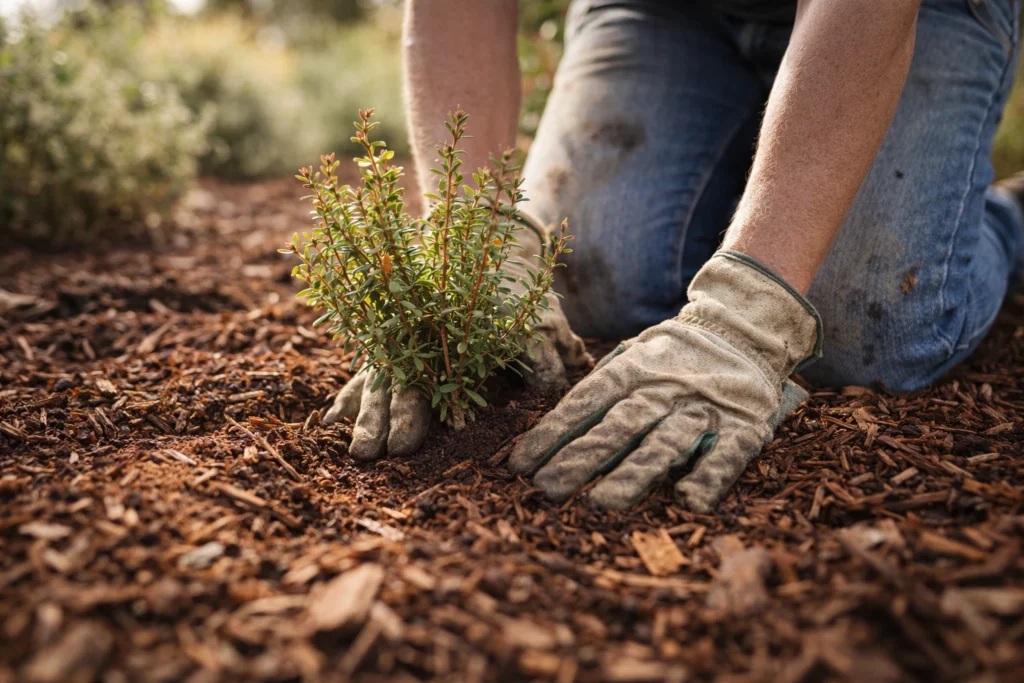
When you skip landscape planning, plants often end up in the wrong spots, leading to frequent pruning, replacement, and extra work. Most of these issues come from just three planning steps homeowners commonly skip before planting.
Wrong Plant Choices Turn Into Ongoing Maintenance
You shouldn’t choose plants based solely on how they look at the nursery. Just think about it. A species that needs full sun won’t thrive in a shaded corner, no matter how much you like the flowers. It will grow weak and leggy, and attract pests due to stress. In the end, you’ll be left trimming dead branches or treating problems until it finally dies and needs replacing.
Skipping Soil and Drainage Assessment Means Replanting
Planting moisture-loving species in sandy, fast-draining soil causes them to struggle and eventually die. When that happens, you go back to the nursery and buy replacements, but those often fail for the same reason since the soil conditions haven’t changed. This cycle continues until you finally test the soil and choose drought-tolerant ground covers that suit the conditions.
Ignoring Mature Size Means Frequent Trimming
One of the most common mistakes we see is planting shrubs near pathways without considering their mature size. For example, a shrub may look small at the nursery, but it can grow quickly over the next few years, eventually reaching three metres tall and blocking the path. At that point, you’re left either trimming it back every month or removing it and starting over.
Site Assessment: The Planning Step Most Homeowners Skip
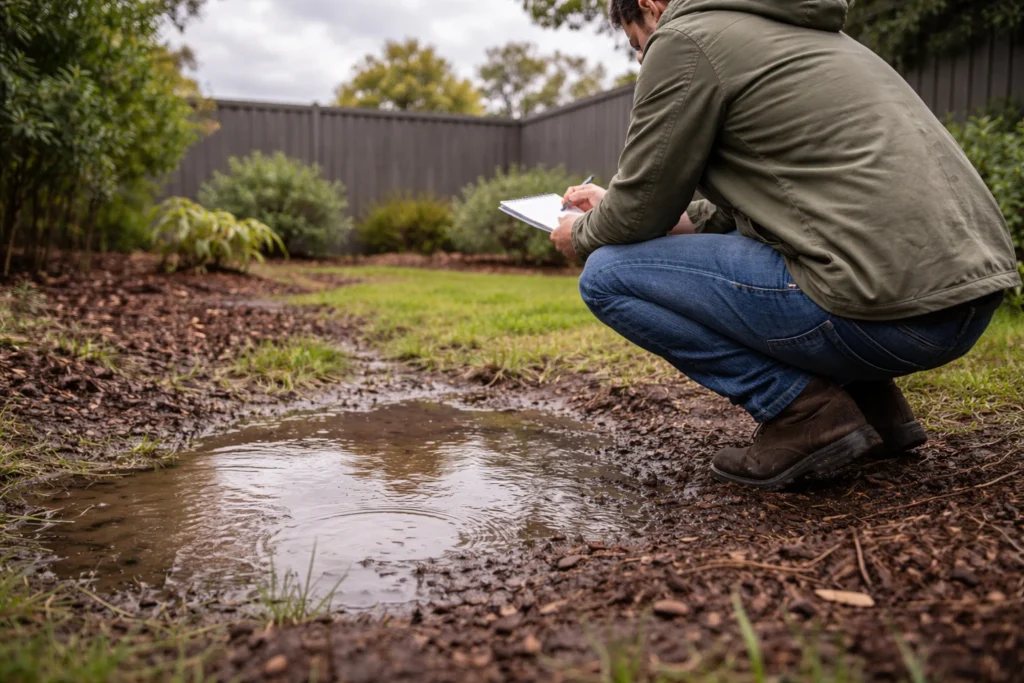
Site assessment tells you which plants will actually thrive in your garden before you waste money on ones that won’t. This means walking your property and noting where water pools after rain, which spots stay shaded all day, and where the soil drains fast or stays damp. Many homeowners skip this step because picking plants at the nursery feels more exciting than checking drainage patterns in their backyard.
But those observations are what separate plants that grow easily from those that struggle nonstop. Take clay soil in a shaded corner, for example. It needs completely different plants than a sunny, sandy patch that dries out within hours of watering.
A proper site assessment before planting tells you which plants will thrive, so you can avoid dead plants or constant maintenance down the track.
Choosing Native Plants and Ground Covers That Thrive
Matching plants to your local climate is a quick way to cut down on watering, fertilising, and pest control. These plants evolved in your local conditions, so they naturally need less water and fewer nutrients once their roots are established.
Native ground covers work the same way. They spread across bare soil and suppress weeds while needing minimal care once established. The important part is choosing species that suit your specific region and soil type, not just grabbing any native at the nursery because it looks good.
Quick tip: If you don’t know which species to pick, check the Australian Native Plants Society directory. It lists which natives thrive in different conditions across Australia, so you can match plants to your garden’s specific soil and climate without guessing.
How Garden Bed Layering and Design Save Time Long-Term
Layering plants by height reduces your workload in two ways. Taller plants shade smaller ones below, cutting water evaporation and reducing how often you need to water. Dense layers also block sunlight from bare soil, preventing weeds from establishing and eliminating constant weekend weeding sessions.
To set this up:
- Start with a small tree or tall shrub as your top layer
- Add mid-sized shrubs underneath
- Finish with low-growing ground covers that spread across the soil
For the first 6-12 months, you’ll need regular watering to establish roots. After that, your layered bed maintains itself with occasional trimming and minimal watering.
Setting Up Your Garden’s Irrigation and Borders from the Start
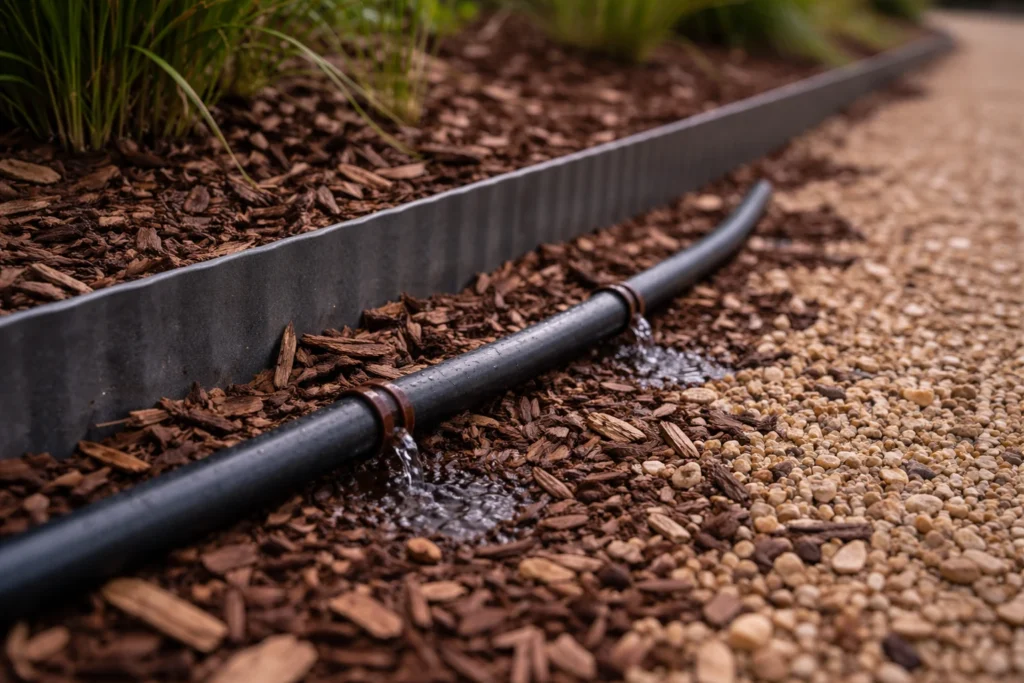
Installing the right systems during the design phase saves you from expensive retrofits later. The goal is to put a few practical systems in place that handle the repetitive work for you:
- Drip Irrigation: These systems deliver water straight to plant roots through underground or surface lines in each garden bed. With drip lines in place, you won’t need to drag hoses around anymore, and plants get consistent moisture without the risk of overwatering from sprinklers.
- Automated Timers: Rainfall is unpredictable, and watering systems can easily run during wet weather if left on fixed schedules. Weather-based controllers adjust irrigation automatically based on rainfall and temperature, preventing overwatering and often reducing annual water bills by 20-40%.
- Mulch and Edging: Weeds steal nutrients and grass often creeps into garden beds without clear boundaries. A palm-thick layer of mulch locks in moisture and suppresses weeds, while metal or stone edging keeps beds contained.
When these elements are built into the design from the start, routine watering and weed control become far easier to manage.
A Phased Approach to Low-Maintenance Landscaping
Start by testing your soil to see whether it drains quickly or holds moisture. This helps you choose plants that will thrive without regular watering or drainage problems. Next, map where the sun hits throughout the day so you can match each plant to the right light conditions.
You don’t need to tackle everything at once. Breaking your project into phases spreads the cost and prevents overwhelm. Investing time in planning upfront saves you from years of replanting, ongoing pruning, and a garden that never quite works.
Need help planning your outdoor space? Contact Peninsula Compost for expert advice on creating a low-maintenance garden that suits your site’s specific conditions.