Are you tired of your outdoor space sitting empty for half the year? You’re in the right place, because you’re about to learn how to make better use of it for every season.
Most patios and backyards get plenty of use in summer, then turn into forgotten zones the moment the weather shifts. That’s a huge waste of space you’ve already invested in.
The thing is, you don’t need a complete renovation. With smart material choices, flexible layouts, and proper weather protection, your outdoor area can work just as well in winter as it does in summer.
In this guide, we’ll cover:
- Climate considerations for your region
- Weather-resistant materials that last
- Flexible layouts that adapt
- Protection from rain, wind, and sun
Ready to make your outdoor investment work 365 days a year? Let’s dive in.
Climate & Seasonal Changes: What You Must Consider
According to the Australian Bureau of Meteorology, extreme weather events have increased over the past two decades, which makes climate-resilient outdoor design essential for many homes.
So what does “climate-resilient” actually mean for your space? It comes down to four core factors: heat spikes, cold snaps, rainfall patterns, and seasonal wind shifts. These forces rarely affect every part of a property equally. Some areas take the full impact, while others stay sheltered.
Here’s what to track throughout the year:
- Temperature swings between seasons
- Average rainfall by month
- The months with the strongest winds or the most direct sun
Once you have this information, walk through your outdoor area and observe how these forces play out. Notice where the morning sun hits hardest. Which sections stay cool all day? Are there low points that collect water after heavy rain? Watch for corners exposed to winter winds. One wall might bake in summer while another stays shaded and damp most of the year.
This on-site assessment reveals what each area can realistically handle. Some zones are ready for year-round use with only minor adjustments. Others require stronger overhead cover or wind protection to stay practical across all seasons.
Finally, identify the months that naturally offer the best conditions for outdoor activity in your region. Designing around these periods gives you a functional, comfortable outdoor area all year.
Choosing Weather-Resistant Materials and Furniture
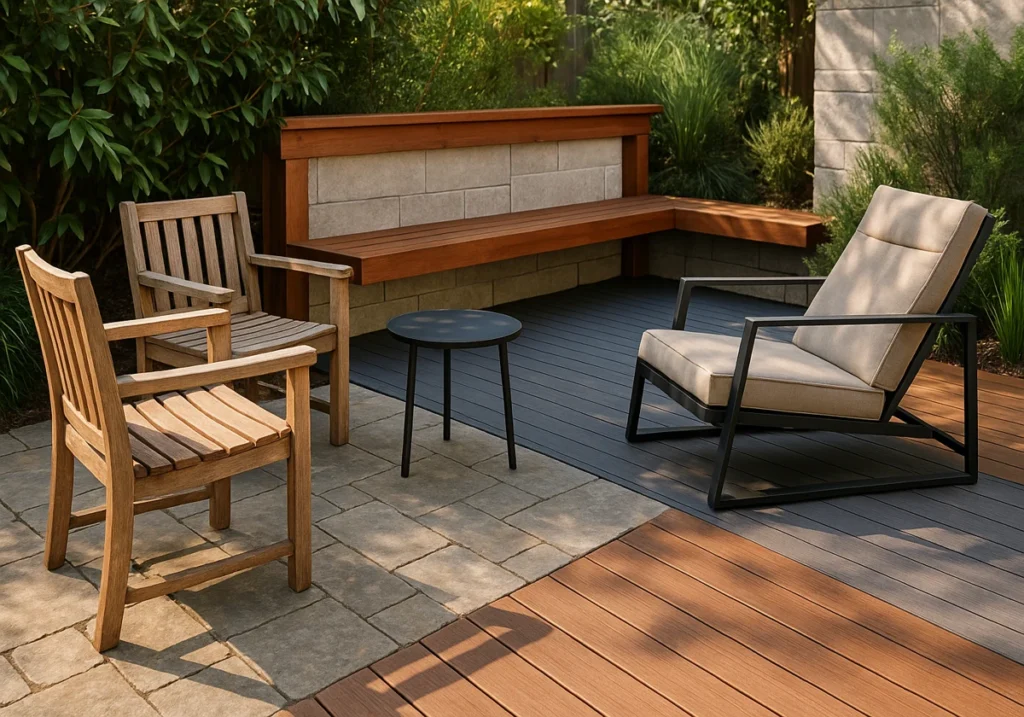
The most successful year-round outdoor spaces use materials that actually improve with age and weather exposure rather than deteriorate.
This quick table shows how common materials and furniture types hold up in different conditions:
Material/Furniture | Weather Resistance | Comfort | Maintenance |
Teak furniture | Excellent – develops natural patina, handles all weather | High – smooth finish, stays cool | Low – oil annually or let it grey naturally |
Aluminium frames | Excellent – rust-proof, lightweight | Medium – can get hot in direct sun | Very low – occasional wipe down |
Natural stone | Excellent – becomes more weathered and characterful | High – stays cool, non-slip when textured | Low – seal every 2-3 years |
Composite decking | Very good – won’t warp, fade, or splinter | High – comfortable underfoot, cool surface | Very low – wash with a garden hose |
Powder-coated steel | Good – durable coating protects from rust | Medium – heats up quickly in summer | Low – touch up scratches immediately |
Hardwood timber | Good – with proper treatment and species selection | High – natural warmth and texture | Medium – stain or oil every 1-2 years |
When choosing materials, consider local weather conditions, how much maintenance you’re willing to do, and your budget for both upfront costs and ongoing care.
Teak and stone cost more initially, but they often save money in the long run because they require fewer repairs and replacements over ten years. On the other hand, composite decking offers a different trade-off: moderate upfront investment with minimal ongoing maintenance.
If you’re working with a tighter budget, powder-coated steel and hardwood timber sit at the other end. They demand regular care but open up more design possibilities and lower initial costs.
The most important part is matching materials to your actual climate and lifestyle. If you live somewhere with intense UV exposure, go for materials that won’t fade. High rainfall areas? Choose options that shed water quickly and resist mould.
Flexible Layouts: Making Your Space Work in Every Season
Have you ever noticed how some outdoor spaces feel cramped in summer but too exposed in winter? The difference comes down to a flexible design that adapts to changing conditions rather than staying locked into one setup.
Start by dividing your outdoor area into zones that suit different weather and activities. This could mean a covered dining area near the house, an open lounge zone for sunny days, and a sheltered corner for cooler evenings. Modular furniture makes this easy since you can rearrange pieces as seasons change.
The placement of furniture is another important factor. Arrange pieces so they can be grouped during cooler months for warmth and intimacy, then spread out in summer to improve airflow and movement. Lightweight furniture makes this rearranging much easier than heavy, fixed pieces.
Keep pathways clear so people can move smoothly between indoor and outdoor areas, even in wet or cold months. While planning your layout, watch out for low spots that collect water. For evening use during shorter daylight hours, install sufficient lighting to ensure the space remains accessible in all conditions.
Planning for Weather Protection
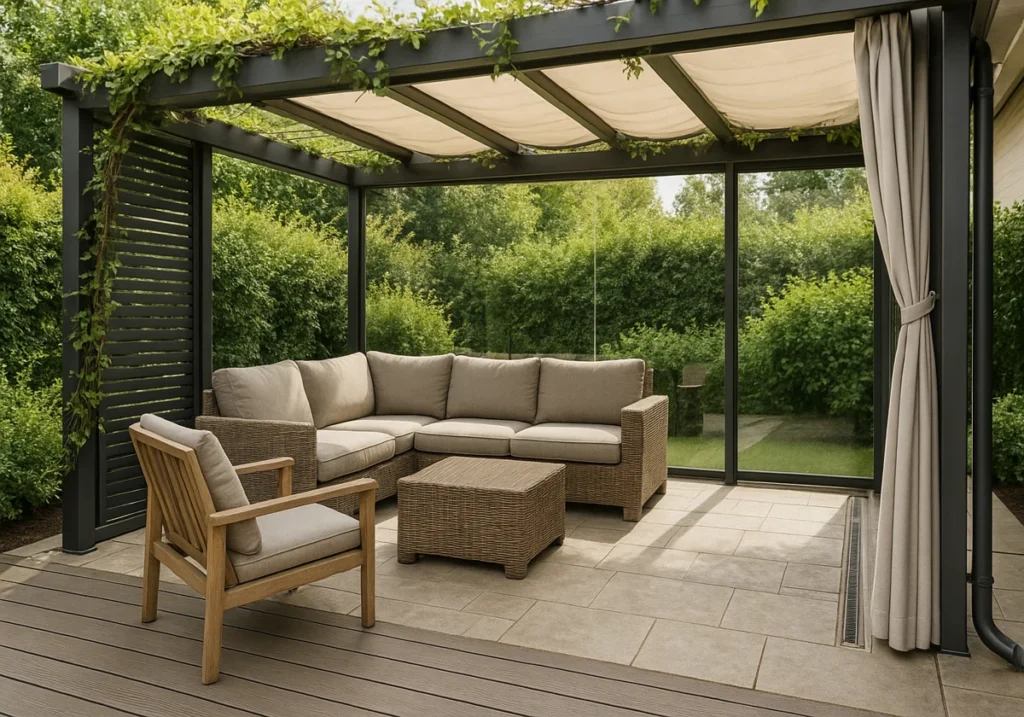
A bit of rain or harsh afternoon sun should not stop you from enjoying your outdoor space. With the right weather protection, you can keep the area comfortable almost every day of the year.
To make it work year-round, focus on these five features:
Overhead Coverage
Pergolas give your space structure while letting sunlight peek through, which is perfect for bright but shady afternoons. Train climbing plants over them, and you will get extra natural shade as they grow. If you want something more solid, fixed awnings offer strong protection, though they are less flexible.
Retractable Canopies
Retractable canopies give you control over sun and shade. You can extend them when the weather turns and roll them back when you want more light. For a budget-friendly choice, canvas and fabric are perfect for seasonal use, though they do require some care.
For a more permanent option, metal and composite canopies provide long-lasting protection with minimal maintenance.
Wind and Rain Protection
Even with good overhead cover, wind and sideways rain can creep in and ruin your afternoon. Screens, barriers, or dense planting help block the wind without making the space feel closed in. Glass panels do the same while keeping your view clear, although they need an occasional wipe (fingerprints and rain spots show up fast).
We’ve seen people use outdoor curtains for a softer look. They work surprisingly well, and you can tie them back when you don’t need them.
Flexible Screening Options
Want even more adaptability? Removable panels, roll-down screens or adjustable louvres let you tailor the space to the weather. Install them once and adjust throughout the year. On a calm winter day, roll everything back. When a storm rolls in, close it all up and stay comfortable.
Drainage and Water Run-Off
Don’t forget about water run-off. Even well-protected spaces can collect puddles. Gutters, downpipes, and a gentle slope help direct water away from your deck and furniture and save you from an accidental slip in the rain.
Incorporating Plants That Thrive Year-Round
The strongest outdoor spaces are the ones that still look good when the weather turns. Plants that hold their shape or add colour during quieter months create a living framework that keeps your garden looking intentional all year.
Here are a few ways to build that kind of year-round interest:
- Keep Your Garden Lively All Year: Look for plants that still bring something to the table when everything else is asleep. Ornamental grasses swaying through winter or shrubs with striking bark can keep your garden looking alive even in the cooler months.
- Embrace Native Species: Natives are already adapted to your climate, so they tend to thrive across the seasons. Bottlebrush, grevilleas and eucalyptus need less water and fertiliser once established, and they bring in local wildlife at the same time.
- Include Evergreen Options: When other plants are taking a break, evergreens keep the space looking full and vibrant. Conifers, native shrubs and broad-leafed evergreens give your garden that backbone it can rely on.
- Plan for Seasonal Rotation: Use garden beds or large pots for tender plants you want to move under cover or change out through the year. This lets you introduce seasonal highlights without disturbing the overall design.
This approach helps your garden feel intentional rather than patchy or bare during off-seasons. You’re not scrambling to cover dead spots or apologising for how things look in July.
Storage Solutions for Seasonal Equipment
Let’s talk about storage, because a cluttered patio ruins the whole vibe. Thoughtful storage keeps your outdoor space organized while protecting your investment in furniture and accessories.
Built-in storage blends seamlessly with your outdoor design. Think benches with hidden compartments or under-deck cupboards.
These solutions serve double duty by providing seating or work surfaces while hiding away cushions, tools, and seasonal items. They also withstand the weather better than portable alternatives since they’re designed as permanent fixtures. They also won’t blow around during storms
For items you move regularly, consider portable options such as waterproof boxes, bins, or containers. Weatherproof deck boxes work well for bulky items like outdoor cushions or pool equipment, while smaller bins handle garden tools and accessories. Look for UV-resistant plastic or powder-coated metal that won’t crack or rust after a few seasons.
Lighting Design for All Seasons
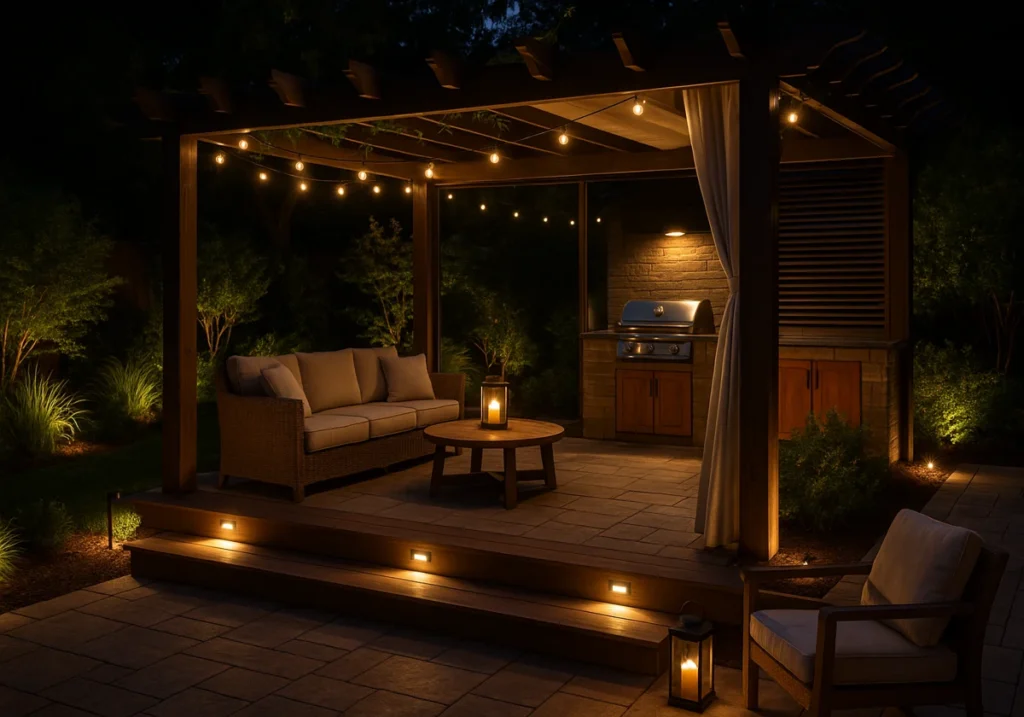
Planning a pool party after sunset or just enjoying a quiet evening outdoors? Outdoor lighting is non-negotiable. In our experience, combining three types of lighting creates spaces that are practical, safe, and inviting:
- Ambient Lighting: Soft garden lights, lanterns, or string lights set the mood and highlight landscaping or architectural features. This is your base layer, like how indoor lighting defines zones. It creates an atmosphere without being harsh or overwhelming.
- Task Lighting: You need to actually see what you’re doing, especially when handling hot food or sharp knives. Focused lights above a barbecue, outdoor kitchen bench, or dining table make cooking and entertaining way easier while supporting flexible layouts from day to night.
- Safety Lighting: Ever watched someone trip over a step they couldn’t see? Motion-sensor lights, low-level bollards, or recessed deck lights guide footsteps along pathways and steps without harsh brightness (and save your guests from embarrassing falls).
Good lighting extends your usable hours well into the evening, which means more time actually enjoying the space you’ve created. Plus, it adds curb appeal to your property.
Maintaining Your Outdoor Space Through the Year
Enjoying your outdoor area shouldn’t mean constantly fixing things. A well-planned maintenance routine keeps furniture, decks, and garden beds in top shape, saves you money, and makes the space feel effortlessly polished every season.
You now know how to create an outdoor space that works in every season: climate-smart planning, durable materials, flexible layouts, proper weather protection, year-round plants, smart storage, and layered lighting. Small, regular tasks prevent expensive repairs down the line.
Need a hand keeping your outdoor space in top shape? Contact Peninsula Compost, and we’ll help you plan, maintain, and enjoy your garden all year round.