Does creating a sustainable garden feel overwhelming to you?
We’ve met plenty of people who hesitate with eco gardening at first. They’re intimidated by the terms and techniques, and the idea of turning a regular lawn into an eco-friendly garden feels too big, so they back away before starting.
Does that sound like you? Then good news: you don’t need special training to build a sustainable landscape. Expensive tools aren’t necessary either. All you really need is a simple plan you can follow.
In this post, we’ll walk you through the planning, planting, and maintaining process of a sustainable garden that you will feel proud of.
Let’s start with the basics of soil, water, and design for your garden.
Foundation Tips for Eco-Friendly Gardens: Soil, Water, and Design
A sustainable landscape starts beneath your feet. Strong soil, smart water planning, and thoughtful design will create a garden that lasts for decades. These simple steps will set you up for long-term success.
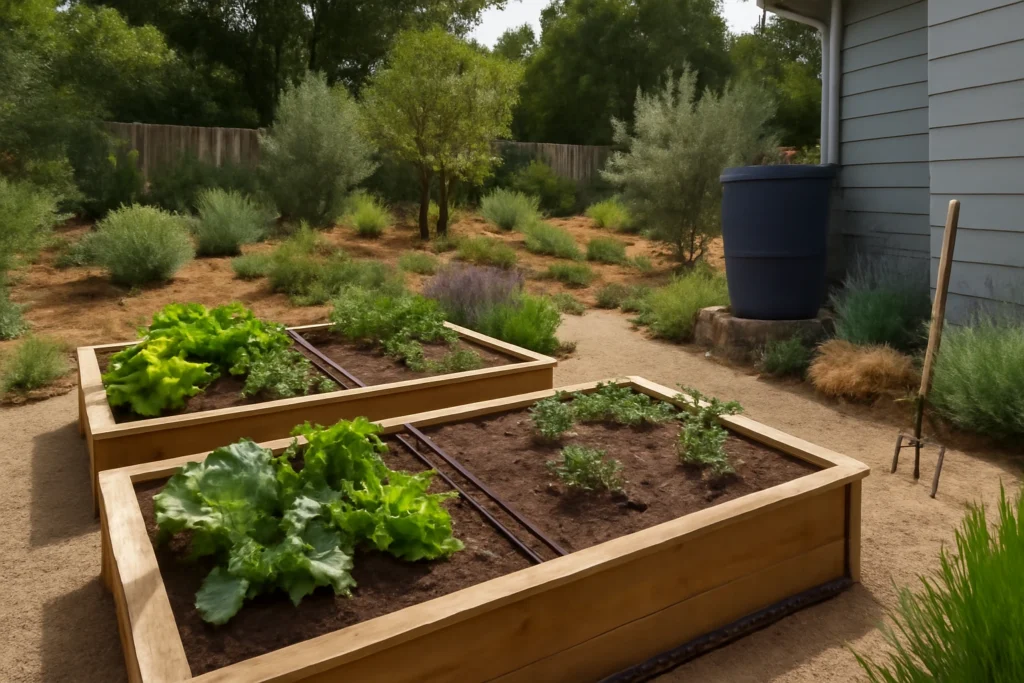
Understand Your Existing Conditions
Before you plant anything, take time to understand what you’re working with.
First, check your soil type using the squeeze test. Sandy soil will fall apart easily, while clay will hold together in a ball.
Then, note down your drainage patterns after rain, sun exposure throughout the day, and any microclimates like shaded corners or hot spots. These observations will tell you which plants will actually grow well in your outdoor area.
Improve Soil the Organic Way
Once you know your soil type, it’s time to improve it naturally. The simplest way is to mix compost into your garden beds to feed your soil and improve its structure.
You’ll also need to spread a 3-4cm layer of mulch around your plants to keep moisture in and weeds out. We recommend grass clippings and leaf litter for this to nourish your garden and prevent erosion in one go.
Smart Water Planning with Hydro Zoning
Now, let’s talk about watering your plants. We use this method of grouping plants to their water needs to cut waste and support strong, drought-ready species. You just have to keep thirsty vegetables together in one spot and away from native plants that barely need watering.
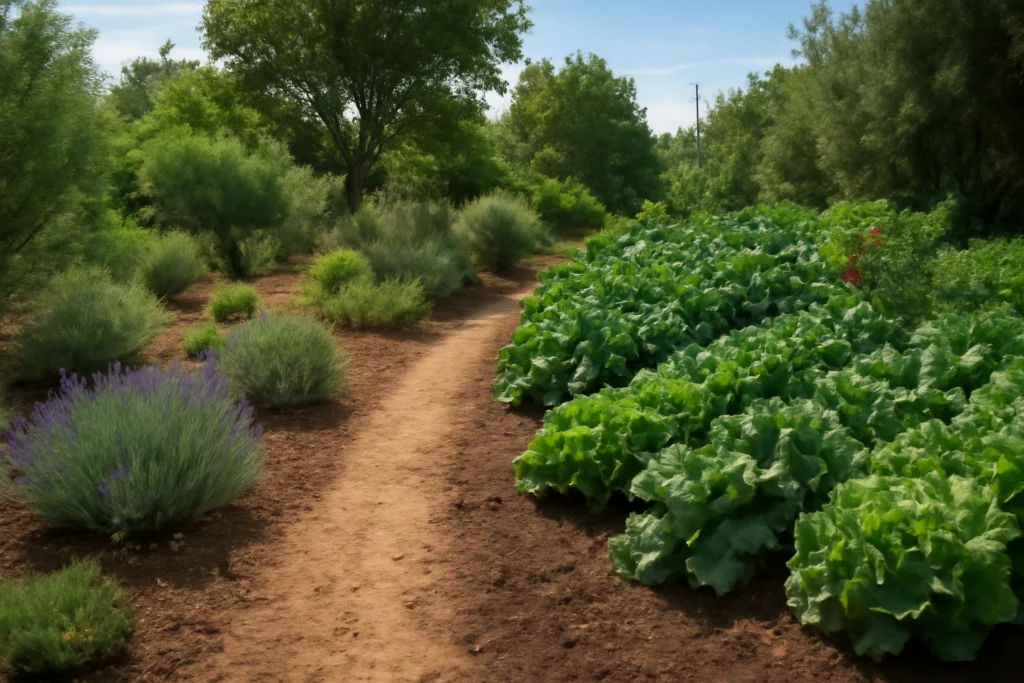
This method is called hydro zoning and can slash your water use by up to 50%! You can pair it with drip irrigation for precise watering and rainwater tanks to collect free water.
Sustainable Layouts
If you design your garden beds to follow the natural shape of your land, it will reduce soil erosion and make watering and maintenance easier.
We recommend mulched paths over concrete for better water absorption. For garden edges, you can use recycled timber or natural stone instead of plastic. These materials need less maintenance, look natural, and even reduce your carbon footprint over time.
Choose Natural Materials
Finally, choose your garden surfaces carefully. You have permeable options like crushed recycled concrete or gravel that let water soak through instead of running off into gutters.
For raised beds and pergolas, reclaimed timber works beautifully. Natural resources like these skip the chemicals, save money long term, and create well-maintained outdoor spaces that will improve as they age.
With your foundation sorted, you’re ready to fill those healthy garden beds with plants that actually earn their keep.
Grow a Beautiful and Productive Garden with Native and Edible Plants
Native species and food plants both have their place when you pick the right ones for your conditions. Here’s how to fill your beds with plants that will flourish in your garden beds.
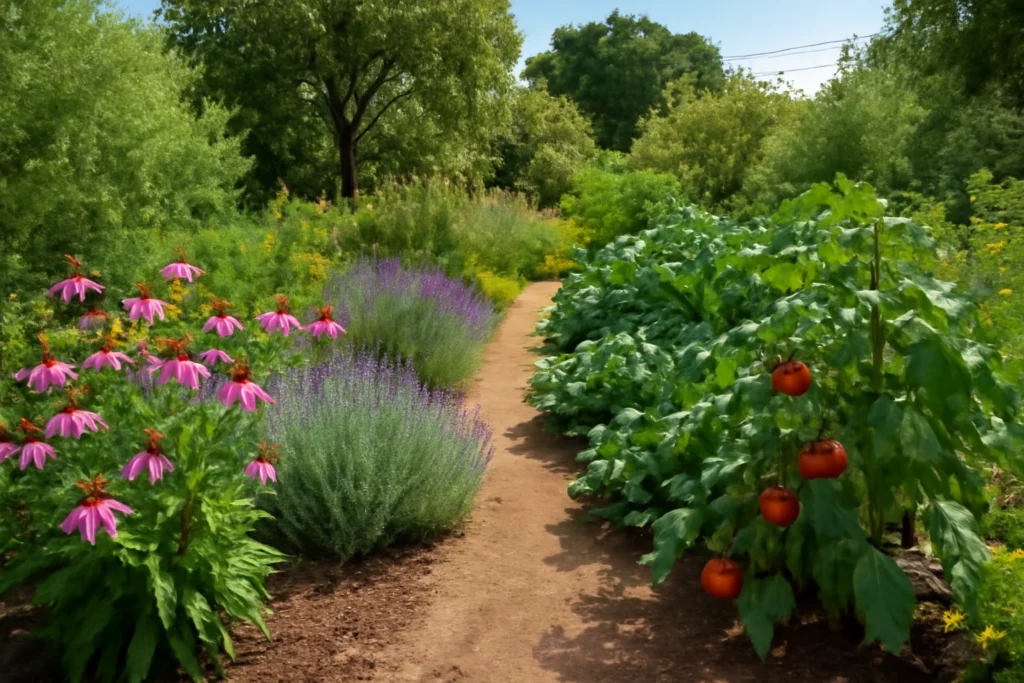
Why Native Plants Are Important
Native plants have spent thousands of years getting used to the Australian weather and soil. They know how to survive here without much help from you.
For example, plants like kangaroo paw, bottlebrush and wattle support local pollinators while using much less water than imported species. They also fight off local pests naturally, so you can skip the chemical sprays. Once they settle in, they’ll handle droughts and tough soil on their own.
Smart Plant Selection
Now, let’s talk about choosing the right ones. Start by checking your soil type with that simple squeeze test from earlier. Sandy soils are perfect for drought-tolerant species like grevilleas and clay soils hold more moisture, which will suit plants like lillypilly.
Also, pay attention to how much sun each spot gets and which areas face the harshest weather. Then you can pick indigenous plants from your local area, since they’re adapted to survive your garden’s conditions.
Food Plants with Visual Appeal
Your vegetable garden doesn’t need to be hidden away in some boring corner. Instead, blend it right into your decorative beds.
Start by planting herbs like rosemary and thyme along the edges for beauty and fragrance. You can also add blueberry bushes between flowers to bring both color and fruit. Berry vines are another option. You can cover your fences with them to add interest and colour.
Double-Duty Spaces
Gardens don’t have to be only pretty or only productive. Why not have both?
You can use edible groundcovers like native mint and plant fruit trees for shade and food. Then use the same area for flowers that feed pollinators and vegetables you can harvest. Create an outdoor area that looks stunning and produces actual yields year-round!
Make Your Garden Sustainable and Climate-Friendly
So, what’s one change you’ll make in your garden this year? Are you adding a compost bin or planting your first native shrub?
The best way to a sustainable garden is to start small and grow over time, so there’s no rush. First, pick one bed, add some compost, and plant something suited to your soil type. You will learn as you go.
By 2026, sustainable landscapes can be the new normal. And your choice of eco gardening is helping the soil, supporting native animals, while creating something beautiful.
Ready to start your sustainable garden journey? Peninsula Compost can help you build healthier soil with quality organic products. Contact us today!