A successful backyard renovation needs three things: an honest look at your current space, clear priorities, and a realistic budget. Get these right, and you’ll avoid the expensive mistakes that derail most backyard projects.
The problem is, most people start browsing ideas and calling contractors without planning first. If you assess what you have, pick your real priorities, and set a realistic budget before anything else, you’ll save thousands in corrections later.
In this guide, we’ll cover:
- Assessing your yard and existing features
- Setting priorities and creating a landscape plan
- Designing outdoor spaces and choosing native plants
- Installing pathways and adding outdoor lighting
Let’s see how proper planning turns your backyard into a space you’ll actually use.
Start by Assessing What’s Already in Your Backyard
Begin with what’s already there (trees, structures, drainage patterns) because understanding your existing features prevents expensive mistakes later. Because you might love that old tree, but if it’s blocking the only sunny spot for outdoor dining, you need to know now.
After that, focus on key areas to take stock of:
Take Stock of Your Existing Features

Walk around your yard and take note of everything. Which trees add shade and beauty? Which shrubs block potential pathways or views of the house?
Grab your phone and take photos from different angles. Measure the distances between your fence, garden beds, and any structures. You’ll thank yourself later when you’re sketching your landscape plan.
Once you’ve documented the physical features, pay close attention to how water moves in your yard. Watch how drainage behaves after a good rain, especially in low spots near paths and garden beds. In our experience, ignoring drainage during planning creates problems that cost thousands to fix (soggy garden beds, muddy paths that never dry).
Understand Sunlight and Local Climate
Sun exposure decides where you’ll actually want to spend time outside. Some areas get blasted with afternoon heat while others stay shaded all day.
Seating and activity zones work better when placed in naturally comfortable spots that match the sun patterns. After mapping the sunlight, look at the broader climate around your property. Local rainfall patterns, summer heat, and prevailing winds all affect what you can grow and where outdoor spaces feel comfortable.
While you’re assessing the space, take note of sightlines from neighbouring properties too. The most beautifully designed patio won’t get used if it feels exposed every time you sit down.
Pro tip: Take photos at different times of day to see how shadows move across your yard. Morning sun hits different spots than afternoon light.
Pick Your Top Three Priorities for Renovation
Most backyard renovations blow budgets because homeowners try to do too much at once, spending on non-essentials before finishing what really counts.
Here’s what happens: that entertaining area you actually need? It gets half the funds it deserves because you also wanted a water feature, new fencing, and a complete garden overhaul.
To avoid this, list every feature you’re dreaming about, then rank them by actual usage. An outdoor dining area with adequate shade coverage beats a fancy fire pit you’ll use twice a year. Be honest about what you’ll really use.
Once you’ve ranked everything, pick your top three. Everything else goes on hold until those three are completed. The hard part is letting go of ideas that sound great but don’t match how you live.
Sketch Out Your Landscape Plan
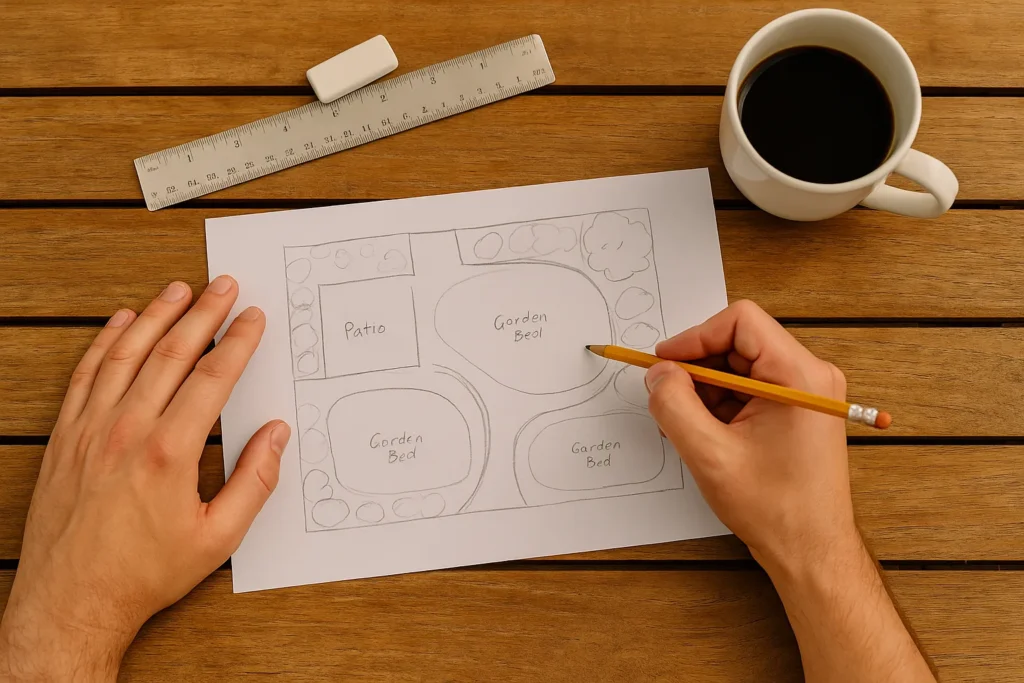
A rough sketch saves thousands by catching layout problems before you’ve dug the first hole or ordered materials. You don’t need fancy software or tracing paper. A napkin works fine as long as you can see where everything goes.
The goal is to translate your priorities and site assessment into a visual plan that shows how different areas relate to each other. Start simple and add detail as you go.
Create a functional layout with these steps:
Step 1:Draw Your Basic Layout Showing Different Zones
Mark seating areas, pathways, and garden beds with rough shapes. It doesn’t need professional precision, just clear zones so you understand where the outdoor kitchen sits, where the kids play, and where you’ll relax.
Step 2: Think About Flow Between Your Outdoor Spaces
Guests shouldn’t have to cut through garden beds to reach the patio. You also don’t want to step through wet grass every time you head to the shed. Clear, well-placed paths make your yard feel organised and easy to move through.
Step 3: Match Materials to Your House Style
Modern homes suit clean lines and concrete pavers. Older Queenslanders often look better with natural stone or timber decking. Cheaper materials look tempting at the start, but they fade or crack within a few years. Most need complete replacement before you’ve even finished paying them off.
The plan doesn’t have to be perfect on the first try. You’ll probably redraw it a few times as you figure out what actually fits in your yard and your budget.
Once you’ve got a rough layout mapped out, it’s time to think about the actual features you’ll include. This is where your top three priorities come into play.
Design Outdoor Spaces You’ll Actually Use Every Weekend
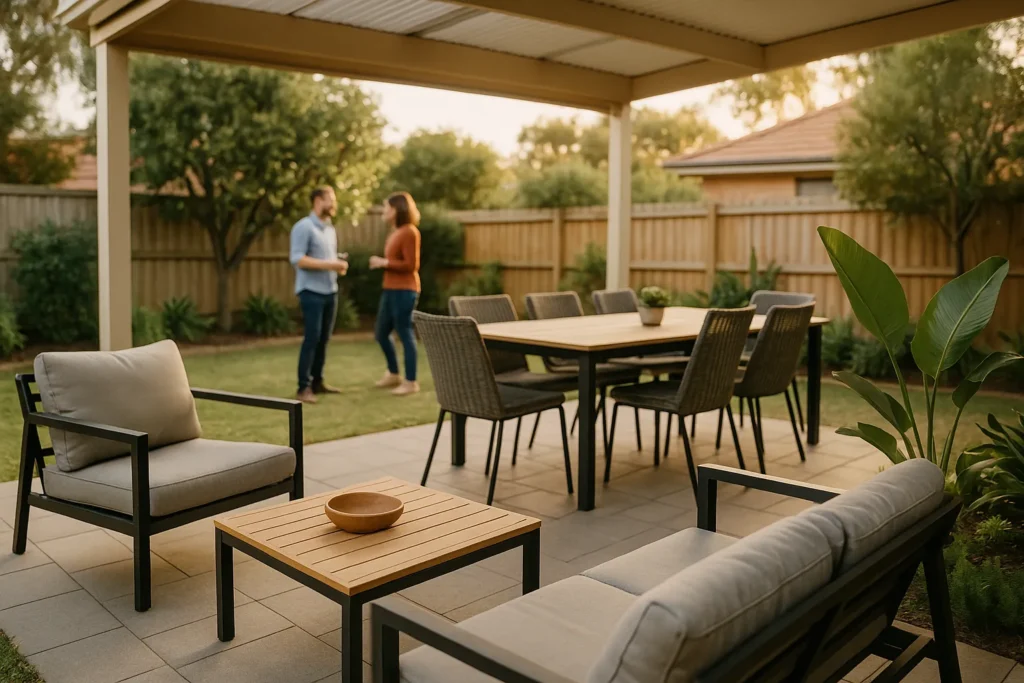
Design each outdoor area around how you actually spend your weekends, instead of how it looks in photos.
Ever noticed how some backyards look stunning online but never get used for entertaining or relaxing? That’s because they’re designed for appearances instead of real life.
From working with homeowners across the Peninsula, we’ve seen three outdoor areas deliver the most enjoyment and value:
- Outdoor Dining Areas with Adequate Shade Coverage: These get the most use in the Australian climate because you’ll actually sit there year-round instead of just summer. Add comfortable seating, easy access between your house and the patio, and covered sections for unexpected rain.
- Fire Pits for Cosy Winter Gathering Spots: Safety comes first here. Keep adequate distance from fences, overhanging trees, and structures. Once you’ve found a safe spot, plan seating in a circle so conversations feel natural. Nothing beats a winter evening around the fire with a glass of red.
- Outdoor Kitchens Worth the Commitment: Plumbing, gas lines, weather-resistant cabinetry, and serious upfront costs make these a major commitment. Choose covered patios with proper ventilation and lighting for nighttime cooking. But once it’s done? Suddenly, everyone wants to help with dinner.
These spaces turn your backyard from something you maintain into somewhere you actually want to spend time. Pick the one that matches your lifestyle first, then add others as your budget allows.
Go Native: Plants That Thrive With Minimal Effort
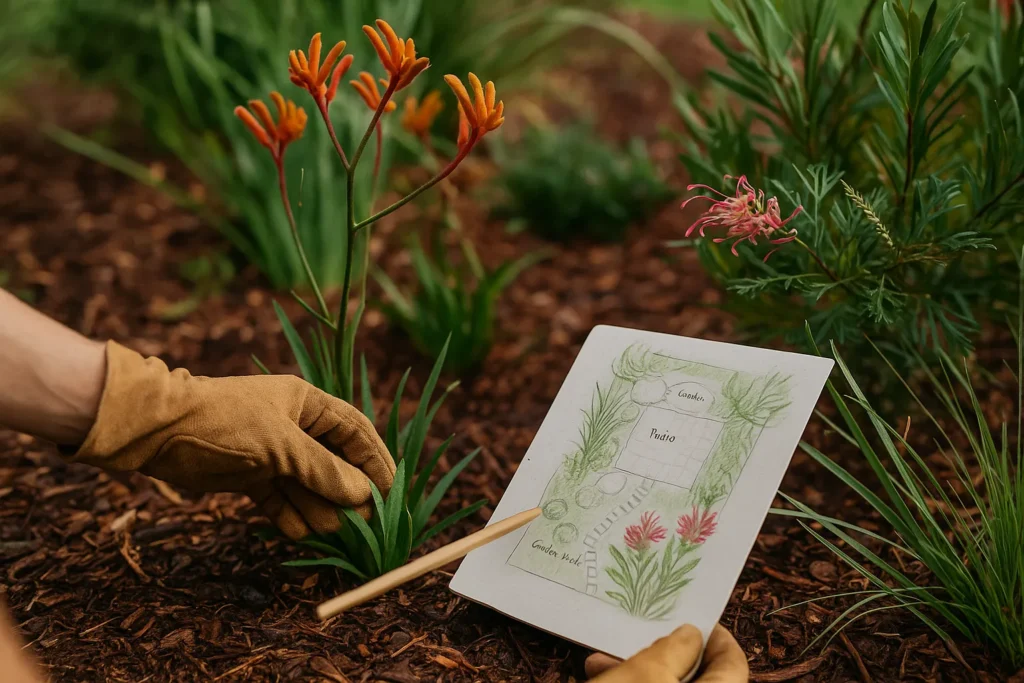
Native plants drastically reduce your maintenance time once they’re established in your garden beds. These plants evolved in Australian conditions over millennia, so they’re naturally suited to handle the climate without constant help from you.
Choose varieties naturally suited to your local area. The Australian Plants Society offers a detailed database of native species that thrive in coastal Victorian conditions, including water requirements and maintenance needs.
We’ve watched homeowners switch from high-maintenance exotics to natives, and the results show up fast (usually within the first growing season). Your garden stays green through summer without constant watering. Plants that would normally need weekly attention suddenly thrive on their own.
You save time, and you also attract local birds and helpful insects that keep pests under control naturally. You won’t need constant chemical treatments because the local wildlife does most of that work for you. Plus, you get rainbow lorikeets visiting your yard instead of just pigeons. Not a bad trade-off, right?
Pavers and Pathways Build the Base
Once you’ve mapped out your outdoor zones, the pathways connecting them need a stable foundation that will stand up to decades of foot traffic and weather. Concrete pavers offer durability, a range of styles, and colours that hold up better than cheaper options.
Before you start laying anything down, keep these essentials in mind:
- Stable Base Layers Are Essential: You need crushed rock and compacted sand under every paver. Skipping this step causes uneven settling and weeds that pop up through gaps (we’re talking months, not years, before problems show up).
- Pathway Placement Should Connect Areas Logically: Consider wet weather access between your house, entertaining zone, and garden shed. You don’t want to trudge through muddy grass every time it rains just to reach the bins.
- Match Material Strength to Traffic Levels: High-traffic areas near doorways and outdoor dining spaces need stronger pavers than decorative garden paths. The durability needs to match how often people will walk on it.
Pro tip: Leave small gaps between pavers for drainage. Completely sealed pathways can create water pooling problems during heavy rain.
With your pathways in place, there’s one more element that determines whether you’ll actually use your backyard after sunset.
Outdoor Lighting That Makes Your Backyard Worth Using After Dark
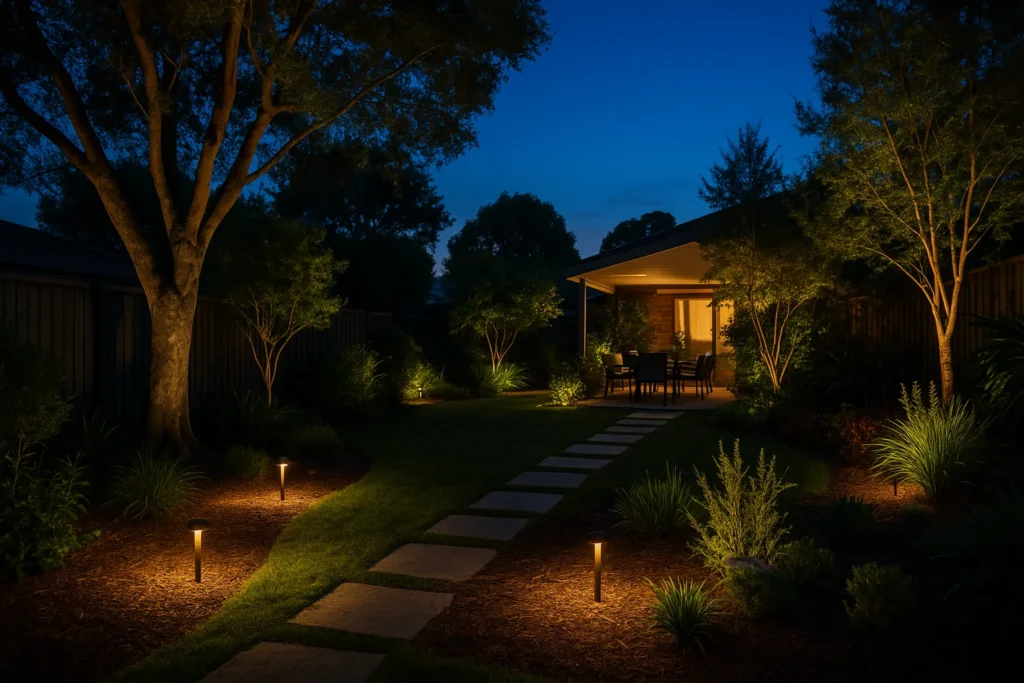
Good outdoor lighting extends your living space well beyond sunset hours. Without it, your backyard sits empty every evening, even though you spent thousands creating it. Proper lighting means you’ll actually use those areas you worked so hard to design.
The best approach is layering different light types throughout your yard instead of relying on a single floodlight. Start with pathway lighting to keep everyone safe walking between areas. Add uplighting on trees to create dramatic shadows and highlight your landscape design. Then layer in ambient lighting around your patio that turns outdoor dining into a comfortable experience.
For fixtures, choose LED options that save energy costs long-term. These come in different colour temperatures, and warm tones work best for spaces where you relax and entertain. Harsh white lights make everything feel like a car park, while softer tones complement the natural beauty of your garden and make guests want to stay longer.
Your Backyard, Your Way
A successful backyard renovation starts with assessing what you have, picking your top three priorities, and sketching a functional layout before any physical work begins. From there, you design outdoor spaces you’ll actually use, choose native plants that thrive with minimal effort, install durable pathways, and add lighting that extends your outdoor hours.
Take your time in the planning phase to get the best results. Rushed decisions lead to expensive corrections and disappointment with the final outcome. You’ll spend more money fixing problems than you would have spent doing it right the first time.
Peninsula Compost helps Mornington Peninsula homeowners with quality materials and expert advice for backyard transformations. We’ve been supporting local landscaping projects since 2002, and we understand what works in this area’s unique climate and soil conditions.