Thoughtful garden design changes how you use your outdoor space by making it comfortable, practical, and inviting. So that, instead of admiring, you start spending real time outdoors.
In a great garden design, the layout determines whether you actually use the space. Plus, you need zones that make sense for your daily life, not just pretty landscaping ideas looking good in photos. That’s why plants come second to functional outdoor areas.
In this guide, you’ll explore how garden layouts change the way your whole family uses the backyard. Plus, we’ll cover native plants that bloom without fuss, design elements for small gardens, and the planning mistakes that waste your weekends.
So let’s see what converts outdoor space into something you’ll use year-round.
Why Garden Design Ideas Beat Plant Choices Every Time
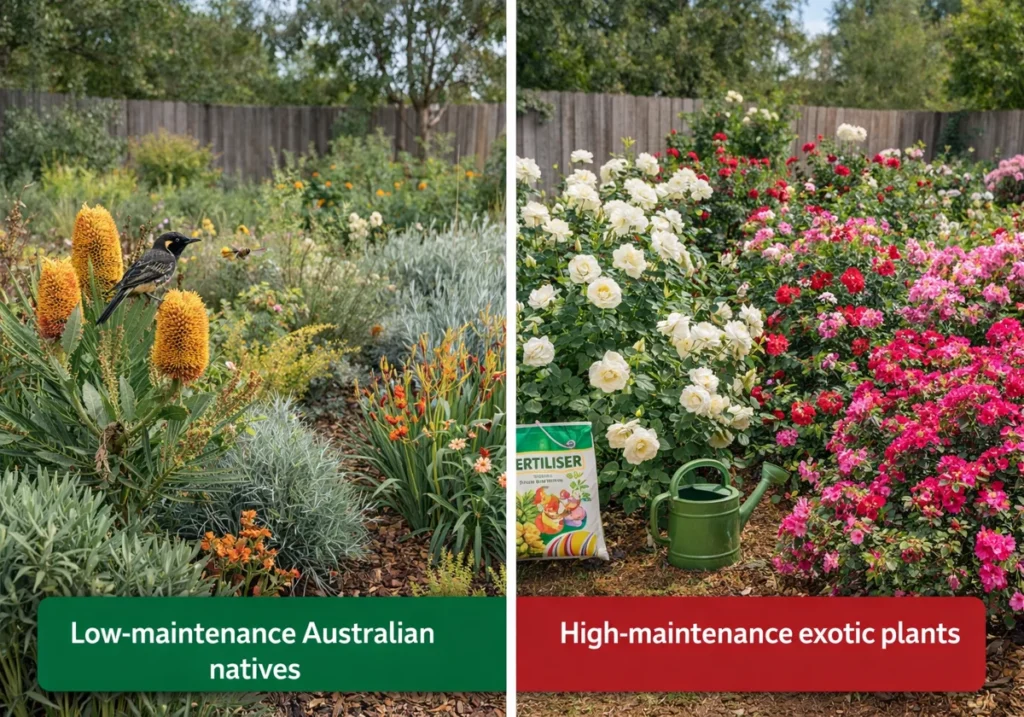
Design ideas beat plant choices every time because they control how you move through and use the space, while plants just fill it in. It means you can have the most beautiful gardens in Australia, but if the layout doesn’t work, you’ll never enjoy them.
Now, let’s look at three ways layout decisions change everything:
How Layout Shapes Your Outdoor Room
Layout shapes your outdoor room by creating clear pathways and defined zones that either invite daily use or leave spaces ignored. Plus, when your yard lacks clear routes between the house and seating areas, you skip going outside.
Furniture placement always needs clear access routes. It’s because squeezing a dining set between garden beds by blocking movement creates frustration. Besides, you’ll brush against plants every time you pull out a chair.
You can also build separate activity areas. They prevent one purpose from dominating your entire backyard. That’s how, when you create distinct outdoor rooms, each space gets proper use.
Native Plants vs. High-Maintenance Alternatives
Australian natives survive dry spells without constant watering, which saves hours each week during summer. These plants evolved in our climate, so they handle the heat and soil conditions naturally.
Meanwhile, exotic species often need fertilising, pest control, and specific soil conditions that natives don’t require (and yes, most homeowners spend 4-5 hours weekly on exotic plant maintenance). For instance, roses demand regular feeding, and azaleas sulk in alkaline ground. So, the maintenance never stops with plants that don’t belong here.
Native landscape gardens attract local birds and bees, too. It creates a living ecosystem while banksias bring honeyeaters into your yard. Besides, native grasses shelter small birds and beneficial insects.
Creating Outdoor Living Ideas That Actually Get Used
Shade structures make outdoor furniture spaces usable year-round rather than pleasant for two months in spring. Without such protection from the sun, your patio sits empty from November through March.
Here, having a weatherproof storage nearby means you’ll grab cushions and lighting instead of leaving them indoors. Otherwise, when everything lives in the garage twenty metres away, you can’t be bothered bringing it out.
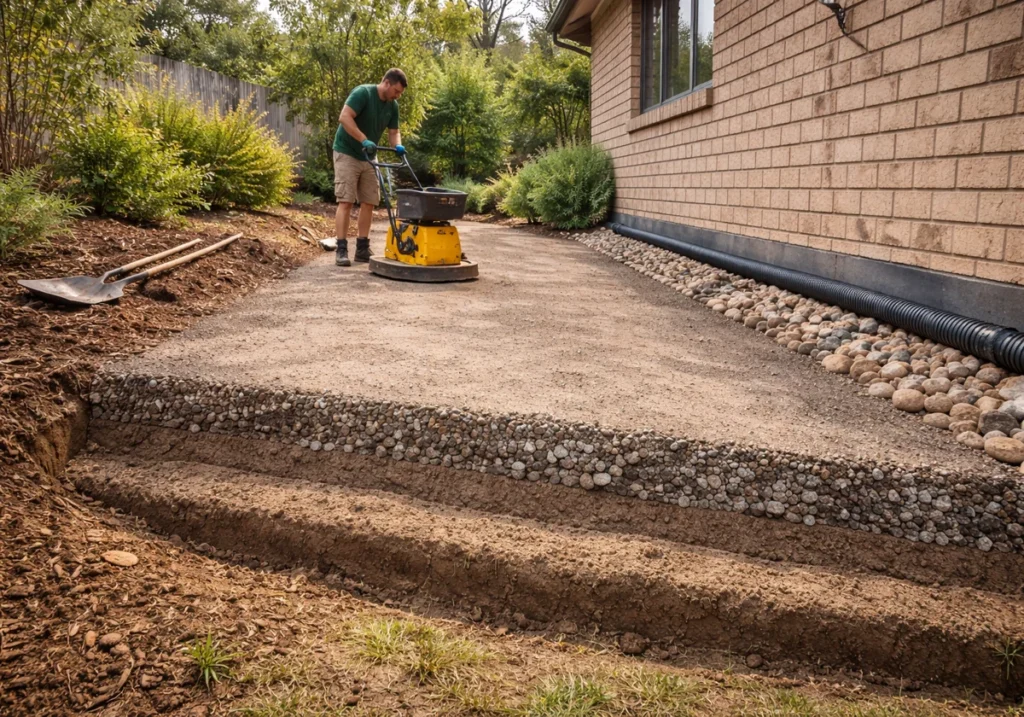
After rain, level surfaces and proper drainage stop spaces from becoming muddy no-go zones. So, if you apply paving here, you will create a stable ground that dries quickly. This way, you get the ground right, and the space works in any weather.
Planning Your Landscape Design: Where to Start
You can start landscape design planning by assessing your yard’s sun, soil, and drainage patterns before choosing any plants or features.
Most people jump straight to Pinterest boards and designer garden ideas without understanding what their backyard truly needs. But the best garden plan even falls apart when you ignore the basics.
So, learn these three basic steps that set up everything else:
Assessing What You’ve Got to Work With
Sun patterns shift throughout the day, so track light before deciding where to place seating areas. Also, check when that spot actually gets shade. It’s because the morning sun hits different zones than the afternoon heat.
Drawing from our 40 years of experience at Peninsula Compost, existing trees and structures create microclimates in your property. Some spots stay cool under branches. Others bake against brick walls. And wind funnels through gaps between the house and fences. Likewise, these patterns determine which native plants will suit and where your outdoor living space makes sense.
Generally, soil drainage counts more than anything else for plant survival, especially in Melbourne’s clay-heavy areas. That’s because clay soil drowns roots and kills most plants.
Pro tip: Dig a hole, fill it with water, and see how long it takes to drain. Anything over four hours means you’ve got problems.
Landscaping Features That Define Outdoor Areas
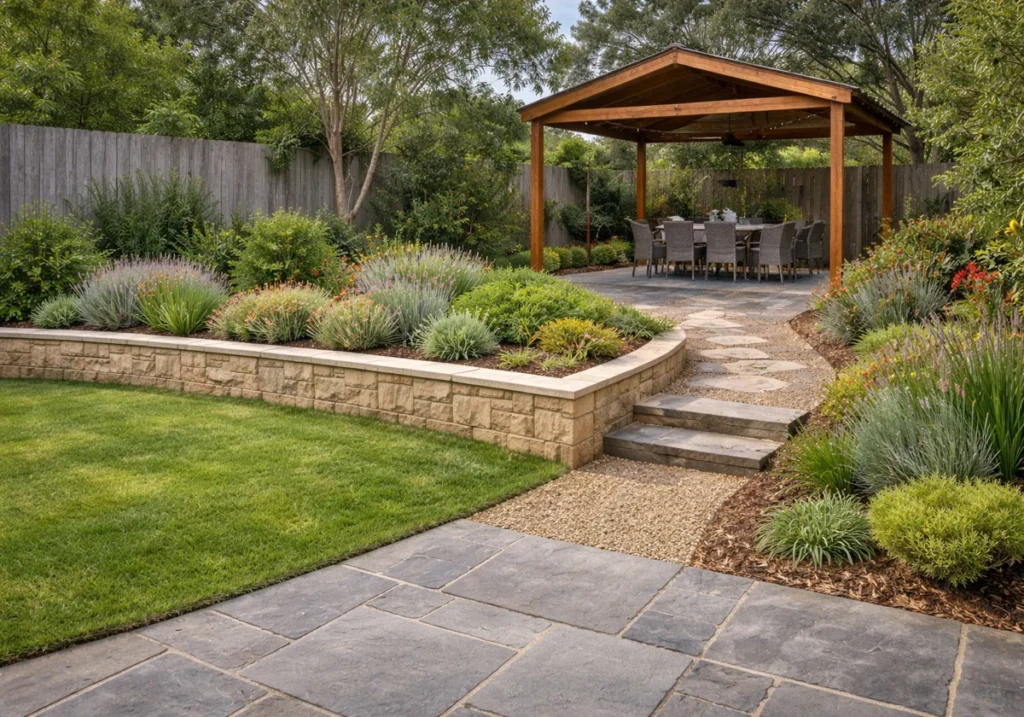
Low retaining walls and garden bed borders create room divisions without blocking sightlines completely. These landscape design elements separate the dining patio from the lawn without building full barriers. That’s how you maintain the open feel while defining distinct zones.
Pergolas and deck structures also establish ceiling height, which makes outdoor rooms feel enclosed without full walls. They frame the space above and give you something to hang lighting from. This way, the feature becomes your outdoor room’s anchor point.
Besides, different paving materials signal transitions between areas naturally. For example, bluestone for the main entertaining zone, gravel for pathways, and mulch in the garden beds.
When you step from one surface to another like this, you’ve moved your place into a different space.
Low Maintenance Strategies for Small Gardens
Mulch layers suppress weeds and retain moisture in garden beds, cutting watering frequency by half during summer. Just spread it thick around native plants and watch your maintenance time drop. Plus, the ground stays cooler, and weeds struggle to push through.
Drip irrigation on timers removes the daily watering routine, especially for container gardens and borders. You can set it once and forget about dragging hoses around. Still, your plants get consistent moisture without you thinking about it.
Groundcovers replace lawn in problem areas where grass struggles. It also removes the need for constant mowing. For instance, in shaded spots under trees, native violet or kidney weed works well. On steep slopes, creeping boobialla provides reliable coverage. Together, these low-maintenance plants fill space without adding ongoing work.
Design Elements That Revamp Compact Spaces
The best part about small gardens is that you can create dramatic changes without massive budgets or months of work. A few wise design ideas in the right spots make your yard feel twice the size. For this, you don’t need acres to build something special.
Have a look at these six elements before starting:
- Vertical Gardening on Walls and Fences: Wall-mounted planters, climbing natives, and hanging pots push your garden upward instead of outward. This way, container gardens stacked vertically add layers without stealing ground area.
- Light Colours on Boundaries: Pale grey or cream paint makes small gardens feel larger by reflecting sunlight and pushing walls back visually. With these, the whole yard opens up because the eye doesn’t hit a hard stop. Similarly, white renders on house walls work fine for tight courtyards in Australia.
- Single Focal Point: Our investigations have shown that one statement feature draws the eye and organises the whole space. In such a context, water features, a sculptural native plant, or a beautifully rendered wall give your garden a clear centre. Everything else supports that main element instead of competing for attention.
- Layered Planting Heights: For layering, add low groundcovers in front, mid-height shrubs behind them, and tall screening plants at the back. That’s how the garden reads as full and established instead of flat. Native grasses and flower species work perfectly for this approach across different levels in your landscape design.
- Curved Pathways Through the Space: The eye follows the curve and explores rather than hitting a straight line to the boundary. Even small backyards gain mystery when paths wind slightly around garden beds. With it, you can’t see the back fence immediately, so the yard feels longer.
- Container Gardens on Different Levels: Stack pots on stands, group them on steps, or cluster them in corners for visual depth. Sometimes, you can swap out tired plants, shift the whole display for parties, or refresh the design ideas without replanting entire garden beds.
The beauty of these approaches? Well, you can mix three or four elements in one backyard without the styles clashing. So, start with one focal point, add some vertical planting, and watch your compact space come alive.
Common Mistakes in Outdoor Space Planning
Sometimes, an “easy” garden project can be converted into a weekend-eating nightmare because of avoidable mistakes that happen right at the start.
Here’s what kills your garden design before you even plant anything:
Mistake | Why It Fails | The Fix |
Planting fast-growing screening plants too close to boundaries | They outgrow the space within two years, block light, and need constant cutting back. That lilly pilly half a metre from the fence hits three metres wide. | Choose slow-growing natives spaced properly with room to mature. Drawing from our experience, check the mature width before planting. |
Installing lawn in shaded areas under trees | Grass needs six hours of direct sun daily, so a shaded lawn becomes patchy and muddy (we’ve watched this fail more times than we can count). Plus, bald spots never improve. | Use shade-tolerant groundcovers or mulched garden beds. Native violets love shade and need zero mowing. |
Skipping proper base preparation before laying paving | Pavers sink unevenly, furniture wobbles, and drainage creates puddles after rain. That’s why poor ground preparation means redoing construction within five years. | Compact base layers properly and ensure a slight slope away from house foundations. For this, get the soil prep right first. |
Placing outdoor dining areas too far from the kitchen door | Carrying food and drinks across the yard means you never use the space. That patio twenty metres away sits empty because the walk feels like work. | Position the main entertaining zone within five metres of the kitchen access. Also, keep essential outdoor furniture close to the house. |
Choosing statement plants that need specific conditions your yard doesn’t provide | They slowly decline or die, leaving gaps and wasted money. Fighting against your natural climate and soil never works long-term in Australia. | Select native plants suited to your actual sun and soil patterns from the beginning. And work with what you’ve got. |
Bottom line: Most mistakes come from ignoring what your yard truly offers. So, plan around reality, not garden ideas from elsewhere.
Time to Rethink Your Garden Ideas?
Good garden design changes how you use your backyard, instead of how it looks. Besides, the layout creates outdoor spaces you’ll actually spend time in. Native plants also reduce maintenance while exotic species eat your weekends.
Small gardens work brilliantly when you focus on the right design elements. Vertical planting, light colours, and smart focal points make compact yards feel twice the size. For this, you don’t need massive landscapes to create something functional and beautiful.
Ready to explore what works for your outdoor space? Peninsula Compost can help you plan a garden that fits your property and lifestyle. Remember, the right inspiration and materials make all the design difference when you’re starting a landscaping project in Australia.