Hardscape should finish at a clear garden edging line, with plants set a few centimetres behind it. This small gap gives roots room to grow while keeping soil and mulch away from your pavers.
Without a solid edge, garden beds can spill onto nearby paving. At Peninsula Compost, we see the same washed-out corners and mulch-covered paths across the Peninsula each autumn.
This guide shows you where to draw that line, how deep to set it, and which garden edging materials last outdoors. Let’s get into it.
Why Does Your Garden Bed or Flower Bed Keep Spilling Onto the Path?
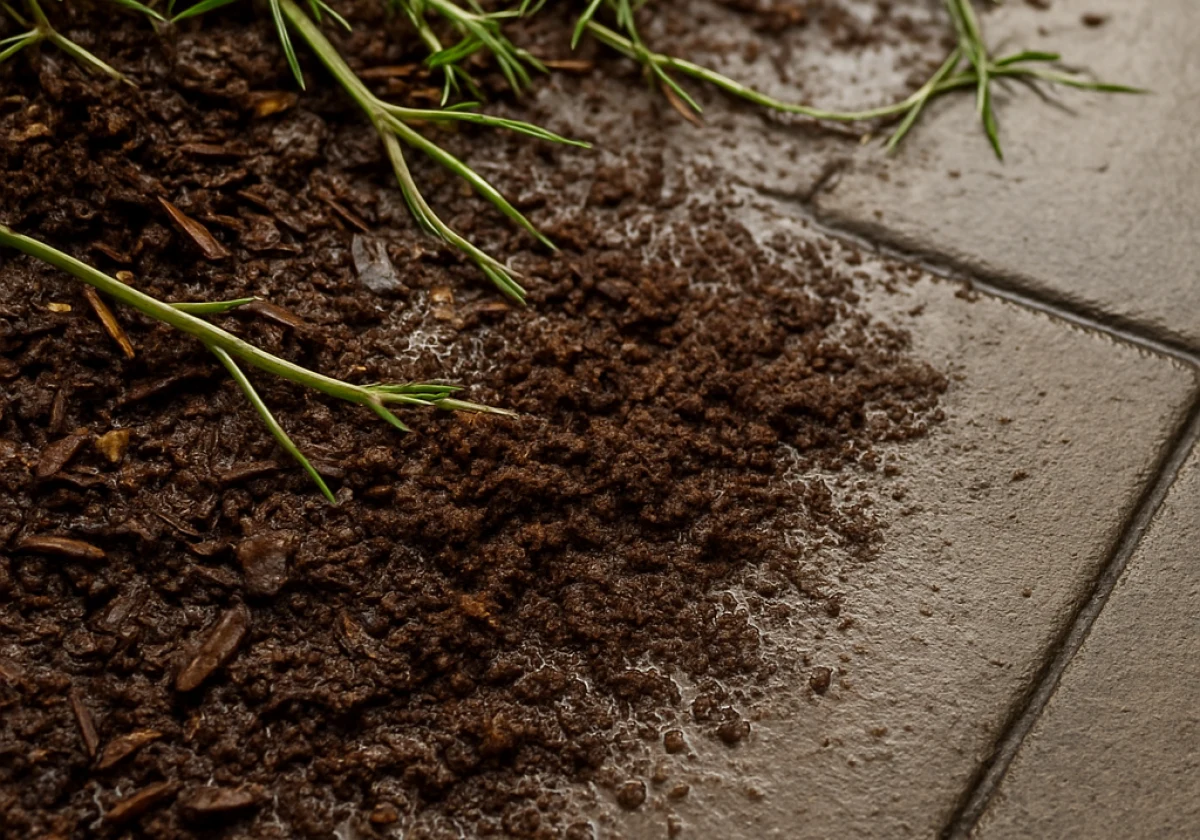
Your garden bed keeps spilling onto the path because nothing solid holds the soil, mulch, and plants in place. Rain hits the mounded soil in your flower beds and lifts the finer particles. It then carries them downhill onto whatever sits lowest (which is almost always your paving). Every heavy shower moves a little more, so the bed sinks at the back while the path collects a gritty brown film.
As the plants grow, they can also spread beyond the edge of the bed. Couch and kikuyu cause particular problems because their runners spread sideways under the mulch before appearing between pavers.
In our years supplying home gardeners around the Peninsula, we have found that creeping lawn runners cause more path repairs than any other single issue, especially during summer.
Foot traffic adds to the problem by pressing loose mulch into the paving and compacting the soil along the garden edge. Without a fixed barrier, mulch needs replacing more often, and the path needs regular sweeping.
A proper garden edging line keeps soil, mulch, and plants where they belong, which helps prevent these problems before they become regular maintenance jobs.
Planning Where Hardscape Ends, and Your Home Garden Beds Begin
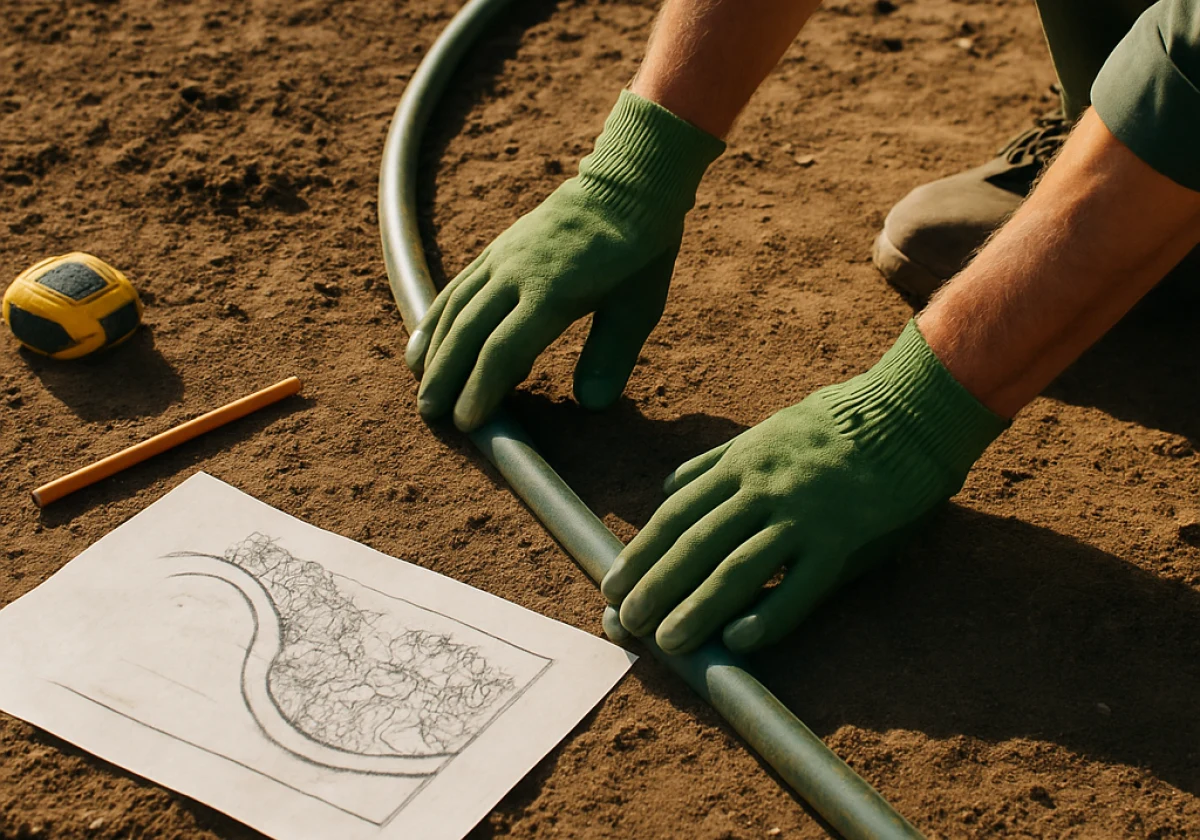
Careful garden bed planning helps create clean borders that stay in place through every season. Treat the edge as a planned part of the garden, with a set height and depth, rather than a line you mark out by eye.
Work through the three steps below, and your edge will hold its shape from the first sketch to the finished run.
Marking the Garden Edge Line in Your Landscaping Plan
Mark the garden edge on your landscaping plan first. Before ordering materials, lay a garden hose on the ground to test the curve. You can also take a photo from an upstairs window, as a curve that looks right on the ground may look uneven on paper.
Once the line looks right, measure its length in metres. This tells you how much edging, garden stakes and pegs you need to order.
Allow about 10% extra for corners and overlaps. It is easier to have a little spare material than to come up short halfway through the job (measure twice, order once).
Why Choose a Fixed Edge Over Loose Decorative Borders
A fixed edge works because it creates a firm barrier at a set depth. In contrast, loose borders made from rocks or timber offcuts can shift when people walk nearby, which leaves gaps between the garden bed and path. And steel edging set 100mm into the ground gives you a more stable boundary and can also help stop grass runners from spreading underneath.
Those loose borders can create another problem by giving weeds room to grow. As the border moves and weeds take hold, you can end up spending more time maintaining the garden than you saved on cheaper materials.
A well-installed edge avoids much of that movement by holding the garden bed in place. It works like a low retaining wall, keeping soil and mulch within the border. Deeper beds may need proper retaining walls or blocks, but most home garden borders can use a simpler edging system.
Matching Edging Heights to Your Garden Path Design
Your garden path design helps determine the right edging height, so start by measuring from the finished paving surface to the level where you want the mulch to sit. Generally, a 75mm profile suits flush paths and lawn edges, while a 100mm or taller profile works better for deeper soil in raised garden beds.
Once you have the height, consider how the edge will meet the paving. Keep the top flush with the paving where you mow along the border, so the mower wheels can roll over it without catching.
The mulch you use also affects the final height. For beds with chunky bark, we set the edging about 20mm above the paving to help keep the bark in the garden bed instead of letting it spill onto the path.
As a general rule, match the edging height to the mulch depth you plan to use. The two should sit level once the bed is filled.
Steel Garden Edging Products and Metal Garden Edging: Comparing the Range
Now, you’ll find that not every edging product survives an Australian summer, let alone a stray pass from the whipper snipper. Thin plastic edging can warp after long exposure to heat, especially along a hot footpath. Untreated pine has a shorter lifespan too, often starting to rot where it sits against the soil after about four years.
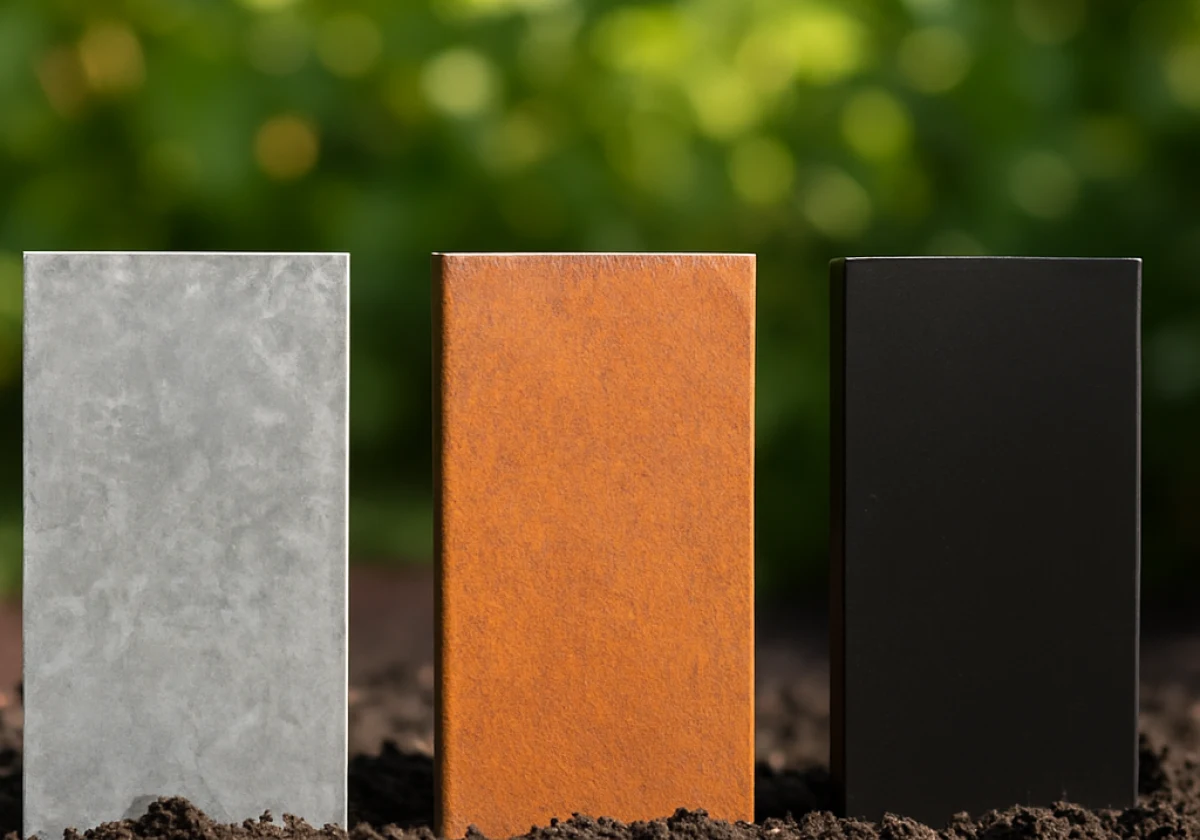
Compare the three steel garden edging options that most home gardeners weigh up before they shop online for a run.
| Product | Common Heights | Life Outdoors | Best Suited To |
|---|---|---|---|
| Galvanised steel edging | 75mm to 150mm | 15 years plus | Straight borders, lawns and curved garden beds |
| Corten steel edging | 100mm to 200mm | 25 years plus | Contemporary gardens wanting a rusted appearance |
| Powder-coated steel | 75mm to 100mm | 20 years plus | Black steel lines against pale paving and gravel |
As you can see, for most everyday projects, galvanised steel offers a strong balance between cost and lifespan. Look for edging made from Australian BlueScope steel if you live near the coast, as its zinc coating helps protect against corrosion caused by salty air. You can also choose a powder-coated finish when you want the strength of galvanised steel with a specific colour or a sharper decorative look.
Corten steel takes a different approach by making its weathered surface part of the garden design. Also known as weathering steel, it develops a deeper rust colour during its first year and can last 25 years or more outdoors. It works particularly well in modern gardens and curved borders, where thinner profiles can be shaped by hand.
Online listings may use terms such as garden edging galvanised, garden edging corten steel or garden edging bluestone. So check the material description carefully to make sure you know exactly what you’re buying.
What to Know Before Ordering Garden Edging
Once you have compared the products, a few practical details can help you plan your order. Delivery times, cutting, installation, and shaping can all affect which edging you choose and what you need on site.
Run your eye over the four answers below, then order with a clear idea of what turns up.
- Delivery Timing: Most orders leave within two business days, with deliveries across Melbourne and the Peninsula usually arriving within a week. That gives you a clearer idea of when to have the site ready.
- Cutting To Length: Short runs and awkward corners are easy to handle on site. Tin snips or an angle grinder can cut the steel cleanly to the length you need.
- Installing It Yourself: A rubber mallet is usually all you need for the basic installation. Edging pegs fit through the pre-punched slots and hold each section securely in place.
- Shaping Tight Curves: For tree rings and curved garden beds, thinner profiles can be shaped by hand. There’s no need for heat or specialist equipment when working with these lighter sections.
Our team can also help with these details before you order. This way, you can get the right advice early, which can help you avoid ordering the wrong lengths or paying for another delivery later.
Ready to Give Your Garden Beds and Outdoor Space a Clean Edge?
Your paths stay cleaner when the hardscape ends with a solid edge, and the plants sit a few centimetres behind it. This simple setup helps keep mulch and soil off the path, which means less sweeping and fewer replacements each year.
Start by measuring the length of your garden beds and paths. Then choose an edge height that suits your paving and the depth of the beds. Getting the measurements right before ordering helps keep the installation on track.
Peninsula Compost supplies garden edging solutions, mulch and quality soil mixes for home gardeners across the Mornington Peninsula. Contact us for everything you need to finish the run.