How much of your weekend disappears into mowing, weeding, and watering? If the answer is “most of it,” you’re just like the many other Australian homeowners.To be honest, a beautiful backyard doesn’t have to eat up all your free time. In many cases, the amount of maintenance it needs depends on the choices you make during the planning stage.
Low-maintenance landscaping starts with the correct plant selection, materials, and layout. Get those early decisions right, and your outdoor space almost looks after itself.
So in this guide, we’ll cover the garden design ideas that save you hours every week, including topics like mulching, irrigation, hardscaping and outdoor living spaces.
How Low-Maintenance Landscaping Creates an Outdoor Space You’ll Actually Use
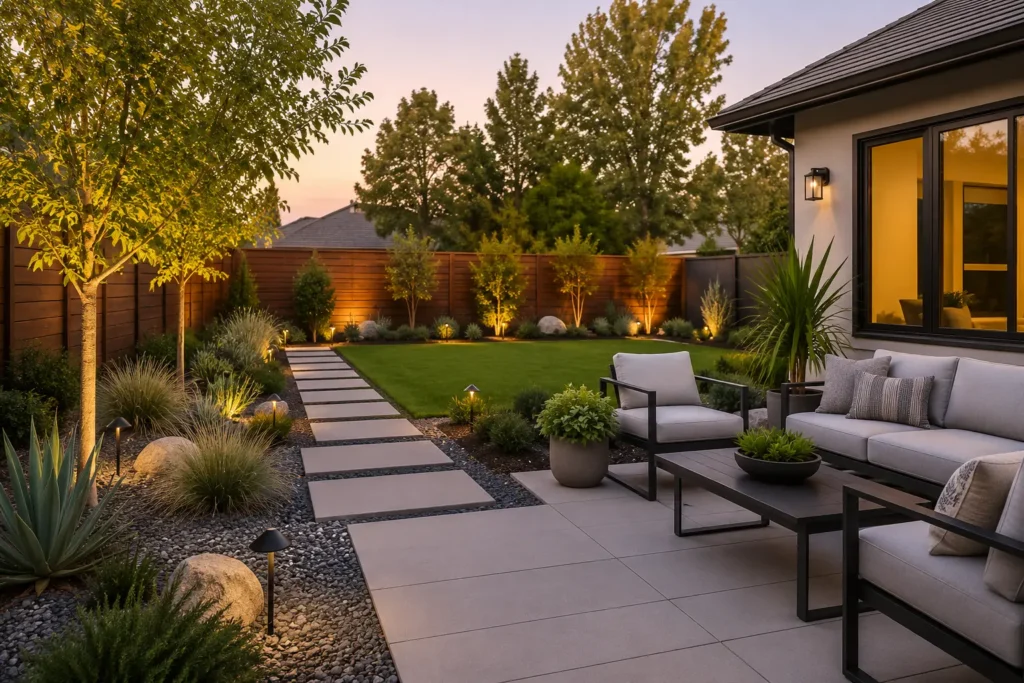
The right combination of plants, materials, and layout can cut your garden upkeep in half. And the best part is that none of it requires a bigger budget or more effort.
Below, we’ll break down the practical ways that make this happen.
Start with a Landscape Plan That Matches Your Lifestyle
Before you pick a single plant, think about how your family actually uses the backyard. Ask yourself these questions:
- Do you entertain on weekends?
- Do the kids need room to run around?
- Do you just want a quiet corner to enjoy a coffee after work?
Those answers should influence your entire layout. Because once the layout matches how you use the space, you’ll spend less time maintaining it.
For example, placing a fire pit or seating area on a paved surface means no mowing around furniture legs every weekend. You’ll spend less time rearranging, less time replacing, and a lot less time feeling frustrated with the whole setup.
Smart Plant Selection Makes Maintenance Easier
Native plants already suit the local climate and soil, so they need much less water once they’re established. They also require less ongoing care than many non-native species.
On the Mornington Peninsula, Grevillea, Westringia, and Lomandra are popular choices because they grow well in dry conditions and don’t lose many leaves. If you’re in wetter parts of Victoria, however, it’s worth asking a local landscaper which native plants are better suited to your area’s soil and rainfall.
Grouping plants with similar water needs in the same garden beds also helps with irrigation efficiency. That way, you stop overwatering one section just to keep another alive. Another way to reduce maintenance is to choose slow-growing varieties, which cut down on pruning, too. You won’t spend every second weekend out there hacking things back into shape (trust us, your secateurs will thank you).
Then there’s the soil itself. When you add compost to your garden beds and cover the soil with around 75mm of mulch, you’ll use less water and spend less time pulling weeds. This way, your plants stay healthier with less watering, and you’ll spend far less time pulling weeds.
Garden Design Ideas That Save Time Every Week
Some landscaping features look high-end but barely ask anything of you in return. Here are the ones we regularly recommend to our clients across the Mornington Peninsula:
- Decorative Gravel and Stone: You can fill entire garden beds and pathways with gravel, and they’ll never need mowing or watering. As a bonus, they also improve drainage during heavy winter rain.
- Raised Garden Beds: If your yard has poor or clay-heavy soil, raised beds solve that problem straight away. They keep soil contained, reduce weed spread, and your back will thank you come planting season.
- Mulched Planting Areas: Think of mulch as a protective blanket over your soil. As we mentioned earlier, a thick 75mm deep layer improves soil health and cuts weeding time right down. Top it up once or twice a year, and you’re sorted.
- Concrete Pathways: Unlike loose materials that shift and settle over time, concrete holds its shape through foot traffic and rough weather. It also creates clean visual lines through your garden without any ongoing upkeep.
- Large-Format Pavers: Fewer gaps between pavers leave less space for weeds to grow. Instead, you get a clean, modern look without the constant edging that smaller pavers demand.
- Composite Decking Instead of Timber: Forget sanding, staining, and sealing every year. Composite holds up beautifully in coastal conditions, and all it needs is a hose down once a month.
- Retaining Walls: Sloping blocks are common across the Mornington Peninsula. But retaining walls help by reducing erosion, keeping soil where it belongs, and providing level areas for planting or outdoor living.
- Shade Trees Positioned Strategically: A well-placed tree like a Crepe Myrtle or Ornamental Pear does two jobs at once. Its canopy provides shade over outdoor living areas, which makes them cooler in summer. And it shields nearby plants from harsh afternoon sun.
- Drip Irrigation Systems: These deliver water directly to plant roots, so nothing gets wasted on empty soil or evaporation. Set them on a timer, and you can forget about the hose entirely.
Every one of these features works together to lower your weekly workload. The fewer things in your yard that need constant attention, the more time you get to enjoy the space. And frankly, that’s the whole point of a well-designed backyard.
Outdoor Living Space and Kitchen Ideas That Deliver Long-Term Value
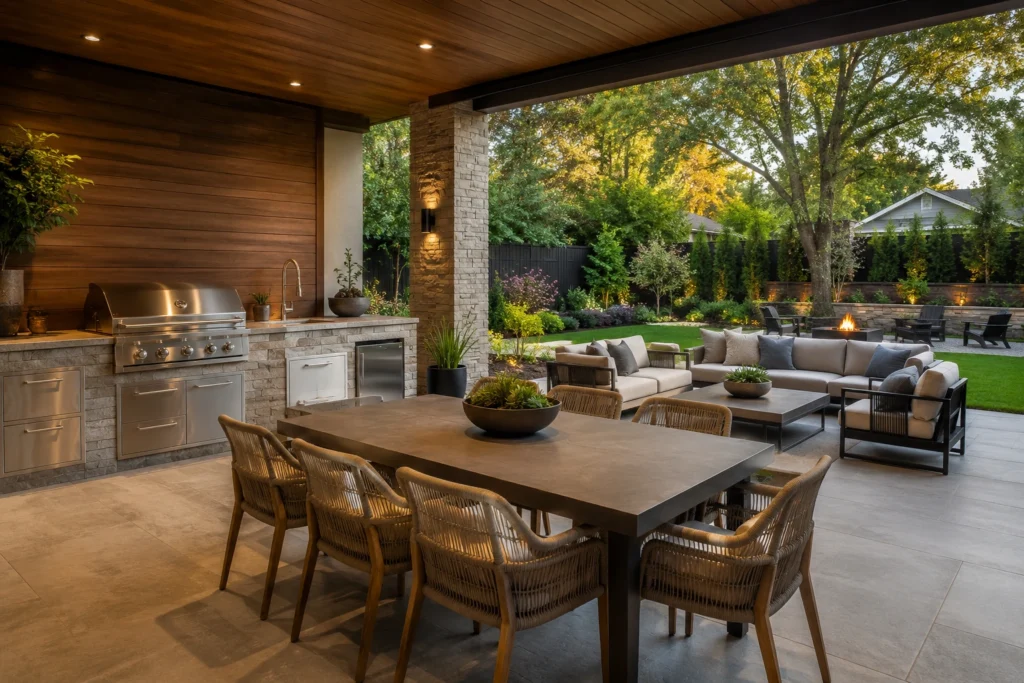
An outdoor living space adds value to your property when it’s built with the right materials and a practical layout. The upkeep stays low, too, as long as you plan for durability from the start.
Take a look at how to make that happen in your own backyard.
Design an Outdoor Living Space You’ll Actually Use
Before you think about decoration, get the functionality right first. After all, a beautiful alfresco area means nothing if your family never uses it because the furniture blocks walkways or the space feels too crowded.
The best place to start is by creating flexible zones for dining, relaxing, and entertaining. Even a small backyard can handle all three when the design is intentional. After that, you can use paving or decking to separate them. This reduces the amount of lawn you need to mow each week while making the backyard easier to use.
And that alone frees up more of your time to actually sit in your outdoor space instead of constantly working on it.
Outdoor Kitchen and Backyard Design Features Worth Considering
Once your zones are sorted, the next step is choosing the features that make your backyard feel complete. Here are the additions our team at Peninsula Compost recommends most often:
- Outdoor Kitchen Areas: Stone, stainless steel, and concrete are your best friends here. They handle weather and heat without warping or staining, which is exactly what you need for a space that gets used year-round.
- Fire Pits: There’s something about a fire pit that pulls people together, regardless of the season. However, go with a gas-fired option if you want the ambience without the ash cleanup and smoke smell on your clothes.
- Water Features with Recirculating Pumps: If you love the sound of running water but not the water bill, a recirculating pump is the answer. It keeps everything flowing on a closed loop, so you get the atmosphere without the ongoing cost.
- Low-Maintenance Seating Areas: Forget the annual timber maintenance routine of sanding, sealing, and repainting. Concrete or composite benches look just as good and hold up far better as the years go on.
- Wildlife-Friendly Planting: Want birds and bees visiting your garden without doing much to attract them? Native species like Banksia and Callistemon do that job beautifully while barely needing any care from you.
- Functional Pathways: Gravel or paved pathways take the pressure off your lawn by directing foot traffic away from the grass. This way, your yard stays looking fresh, and you avoid those worn-out patches that show up in the same spots every summer.
Together, these design choices reduce maintenance and give you more time to enjoy your backyard.
Australian Landscaping Solutions for Easier Maintenance
Australian summers are hot and dry, and water restrictions make things even tougher on gardens. That’s why designing with those conditions in mind from day one saves a lot of trouble down the track.
The first step is improving your soil before you plant anything. We recommend compost and organic matter here, as it helps the soil hold moisture for longer. As a result, your plants need less frequent watering and are better able to handle dry spells.
It’s also worth choosing materials that handle UV exposure and major temperature swings. Concrete, natural stone, and composite products all perform well in Australian conditions without cracking or fading. While timber looks great in year one, it often splits and greys within a couple of seasons unless you regularly seal and maintain it.
This is how you should plan for these harsh conditions and save yourself from replacing plants, repairing surfaces, and redesigning whole sections later on.
Outdoor Renovation Doesn’t Have to Mean More Work
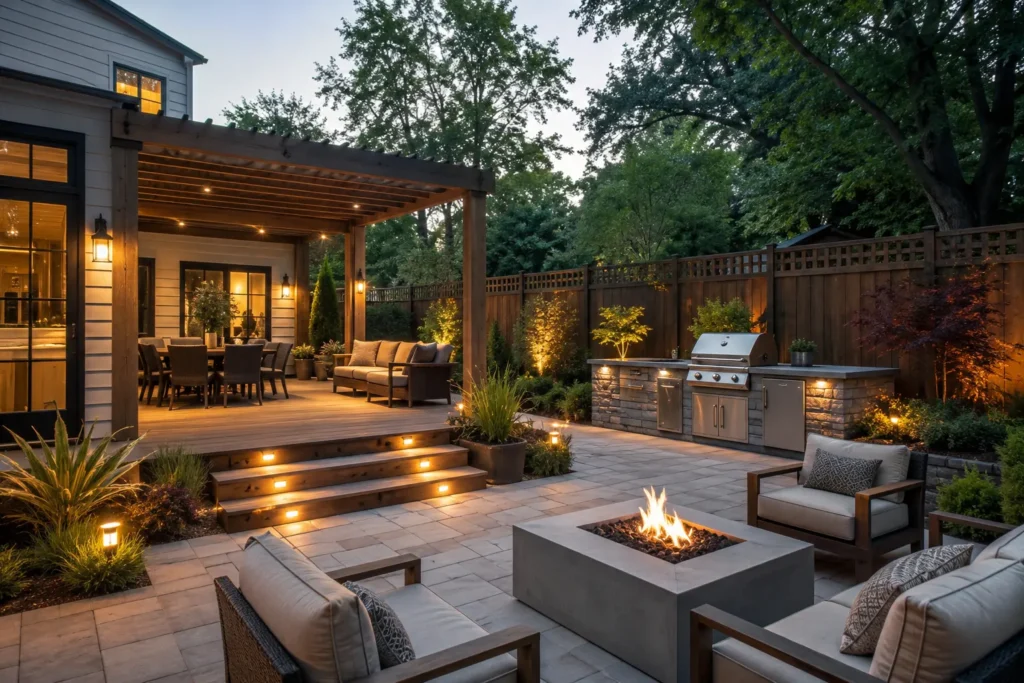
We hope these ideas have changed how you think about your backyard.
Generally, the right mix of planning, plant selection, and durable materials creates a garden that gets easier to care for over time. And when you invest in quality design upfront, you naturally spend less on maintenance while protecting your property’s value, too.
However, since every property is different, focus on what suits your climate, lifestyle, and how much time you want to spend in the yard with gloves on.
If you’re ready to get started, our team at Peninsula Compost has been helping Mornington Peninsula homeowners for over 20 years. Reach out through our contact page and let’s talk about your project.