Every outdoor material ages differently. Timber greys, stone weathers, and concrete can crack under pressure.
That means a new yard can look very different after several years. On day one, the pavers sit neatly in place, and the timber looks fresh. Over five or ten years, regular exposure to sun, rain, and moisture can change how these materials look and perform.
The problem is most homeowners choose materials based only on that fresh look. And that often leads to surprise repair costs later. However, ageing doesn’t always mean failure. Bluestone gains character over time, and timber can fade to a natural silver grey.
In this article, we’ll break down how common landscaping materials weather over time so you can plan your garden design with confidence.
Garden Beds, Timber, Stone and Composite Materials: How Do They Change?
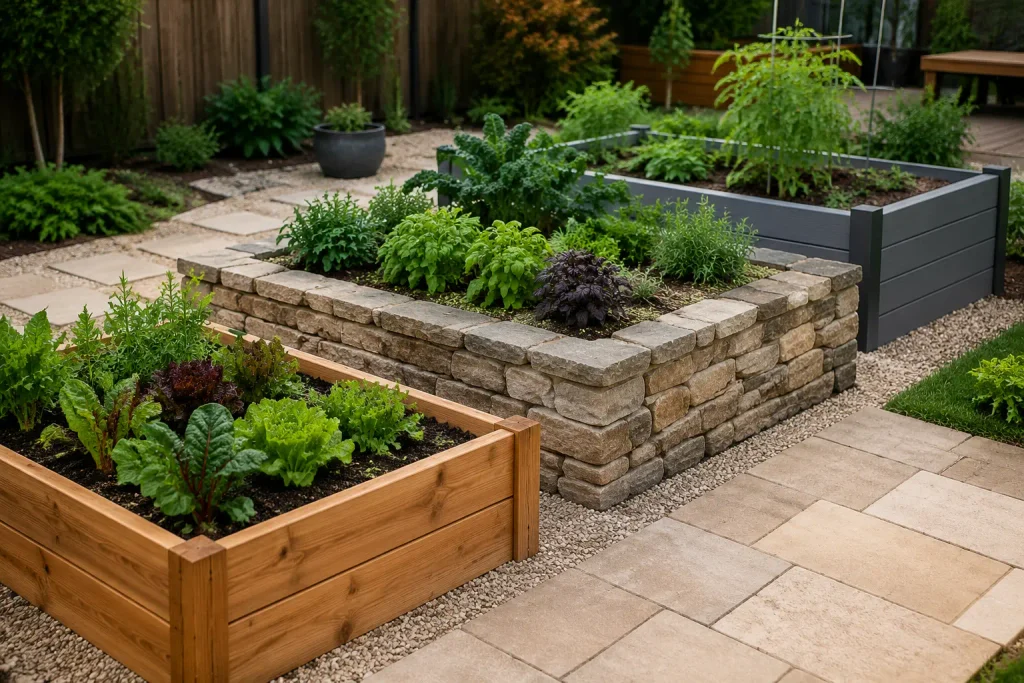
As we mentioned, each material ages on its own timeline, and local conditions like sun, moisture, and soil contact speed up or slow down the process.
So let’s look at what to expect from each one and how to plan around it.
Timber: Natural Character With Ongoing Care
UV light breaks down the lignin in timber, which is the compound that gives wood its warm colour. Over time, that breakdown causes the surface to fade into a silver grey. Rain and moisture then speed up the process by washing away some of the weakened compounds.
The amount of moisture timber receives also depends on where you use it. For example, a raised deck with good airflow can grey evenly and stay in good condition for years. However, timber garden bed edging that sits directly in soil stays exposed to moisture for longer. This can encourage rot and fungal growth, so it may not last as long.
That’s why it helps to know the difference between normal ageing and signs of damage. Fading and greying are normal changes, but a leaning retaining wall or soft, crumbling boards can indicate a structural problem that needs professional attention.
So the trade-off with timber comes down to one thing. It’s warmth and natural character in exchange for regular oiling and inspections every one to two years.
Stone: Ageing Can Become Part of the Design
Natural stone like bluestone, granite, and sandstone already has colour variation and texture built into its surface. So when it weathers, the changes tend to blend in rather than stand out.
Over time, you might notice moss forming in shaded spots or a subtle patina developing (that darkening or colour shift you sometimes see on older stone surfaces). Many homeowners find these changes actually add character to their garden beds, paths, and retaining walls.
However, not all stone performs the same way. Granite handles heavy foot traffic and temperature swings better than softer options like limestone, which can erode without annual sealing.
Plus, good site preparation and proper drainage can prevent water from building up underneath. This can protect stone structures and help them stay in good condition for 10 or 20 years.
Composite Products: Lower Maintenance Still Requires Care
Composite decking and screens appeal to homeowners who want a consistent look without annual staining or sealing. The boards combine recycled wood fibres and plastic polymers, with UV inhibitors built into the protective outer layer to slow colour change.
Even with this protection, composite boards can change colour slightly at first. Most products go through a small colour shift during the first 8 to 10 weeks as natural tannins wash out and the UV exposure settles. After this initial period, the colour usually becomes more stable and stays fairly even for years.
In most cases, the quality of the product affects how well it holds its colour. Boards with thicker protective layers and higher-grade UV stabilisers hold their colour far longer than budget alternatives. When comparing products, check the specifications for terms such as UV stabilised, UV resistant, or UV protection. Details about the protective layer, weather resistance, or expected colour retention can also help you identify a product that is better suited to long-term outdoor use.
Even so, dirt, leaf debris, and pooled moisture still cause surface staining if you leave them sitting. So, low maintenance doesn’t mean no maintenance.
Retaining Wall and Outdoor Paving Materials: What Lasts Well in Landscape Construction?
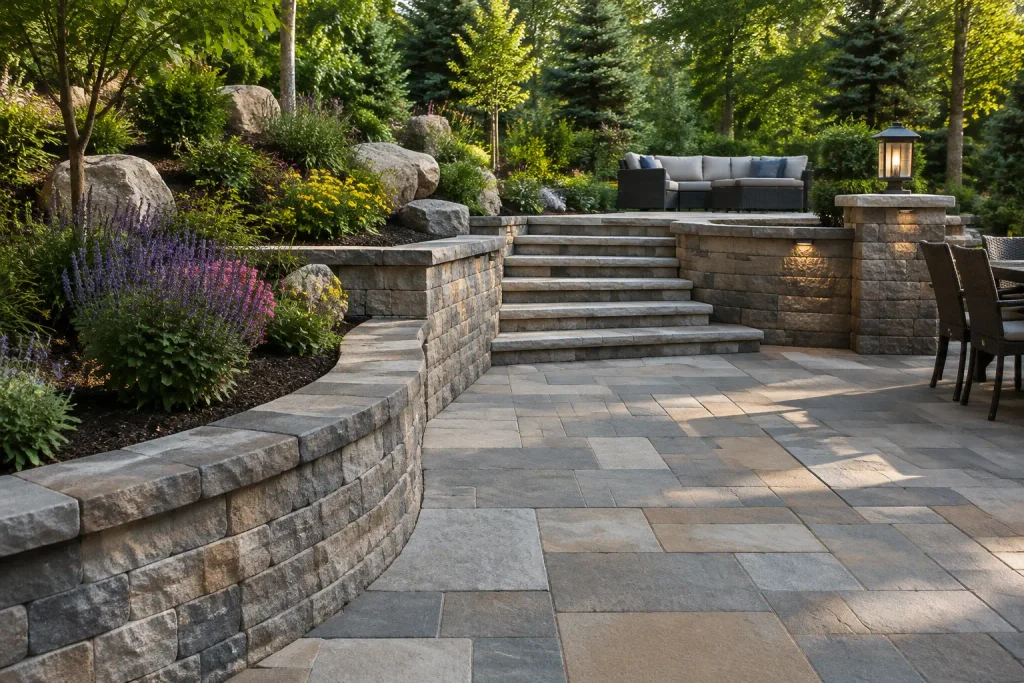
Concrete, pavers, and stone can all last well when you choose the right material for the site and install it on a solid base. The surface is only one factor. The base underneath plays a major role in how long the project lasts.
Here’s what to consider for each material.
How Outdoor Paving Changes
Concrete and pavers are popular choices for paths, patios, entertaining areas, and house surrounds. Homeowners tend to choose them for their consistency, wide colour range, and reliable performance in high-traffic zones.
However, like any outdoor material, concrete and pavers change over time. UV exposure can gradually fade their colour, while leaves, algae, and other organic matter can leave stains, especially on lighter surfaces.
You may also notice a white, chalky residue called efflorescence. This happens when salts inside the material rise to the surface. Although it can look concerning, it’s a natural part of the curing process and usually clears within 6 to 18 months.
None of these are structural failures, though. A paver that fades slightly or picks up a bit of moss is just ageing normally. Cracks, sinking, or water that pools on the surface are different. These problems can point to issues with the base or drainage underneath, which can affect how long the surface lasts.
Why the Base Is Just as Important as the Paving
Even quality pavers can fail if the ground underneath isn’t prepared properly. Good drainage, proper compaction, and the right sub-base depth can keep pavers stable and prevent movement over time.
And this is where a lot of money gets wasted. A homeowner might invest in premium pavers but skip proper ground preparation to save on the install. So within a few years, the surface shifts, pools water, and starts cracking under pressure.
Now, proper installation needs to meet the relevant Australian requirements. For paving and retaining wall projects, this can include standards such as AS 4678 for earth-retaining structures. This standard covers the design and construction of retaining walls and other structures that hold back soil, including factors such as stability, loads and drainage.
What to Consider When Choosing a Retaining Wall Material
A retaining wall does two jobs at once. It holds back soil and manages ground levels, while shaping how your yard looks. So the material you choose needs to handle both roles well.
Timber sleeper walls suit low garden beds and informal edges, but treated pine typically lasts only 15 to 25 years before rot and termite damage take hold. Concrete sleeper walls hold up much longer, often 40 to 60 years with minimal upkeep.
And natural stone walls can exceed even that. For example, the heritage sandstone retaining walls at North Head Sanctuary in Sydney were built between 1880 and 1935 and are still standing today.
But regardless of which material you choose, drainage behind the wall is just as important as the wall itself. In fact, water pressure is one of the main causes of retaining wall failure. Water adds pressure behind the wall, especially when it cannot drain away. Over time, this can push the wall outward, cause it to lean or crack, and eventually lead to failure.
You may also need approval before building. In many Australian states, retaining walls over 600mm require a permit, while larger or structural walls may need engineering and council approval (this can vary by state and council).
Landscape Construction Should Respond to the Site
The right landscaping materials depend entirely on where they’re going and what they need to do. So before you commit to any product, it helps to get answers to these seven questions first:
- How exposed will the material be to direct UV and heat throughout the day?
- Does the area drain well, or will it stay damp after rain?
- Will it carry regular foot traffic, or is it mostly decorative?
- How much cleaning, sealing, or treatment are you prepared to do each year?
- Do you prefer natural weathering, or want a surface that stays consistent?
- Are you comparing total cost over time, including maintenance and replacement, or just the purchase price?
- How will it sit alongside your plants, lawn, mulch, soil, and existing structures?
There is no single best material for every yard. Successful landscape construction matches the product to the job, the location, and the homeowner’s long-term expectations.
Plan Your Landscaping for Long-Term Performance
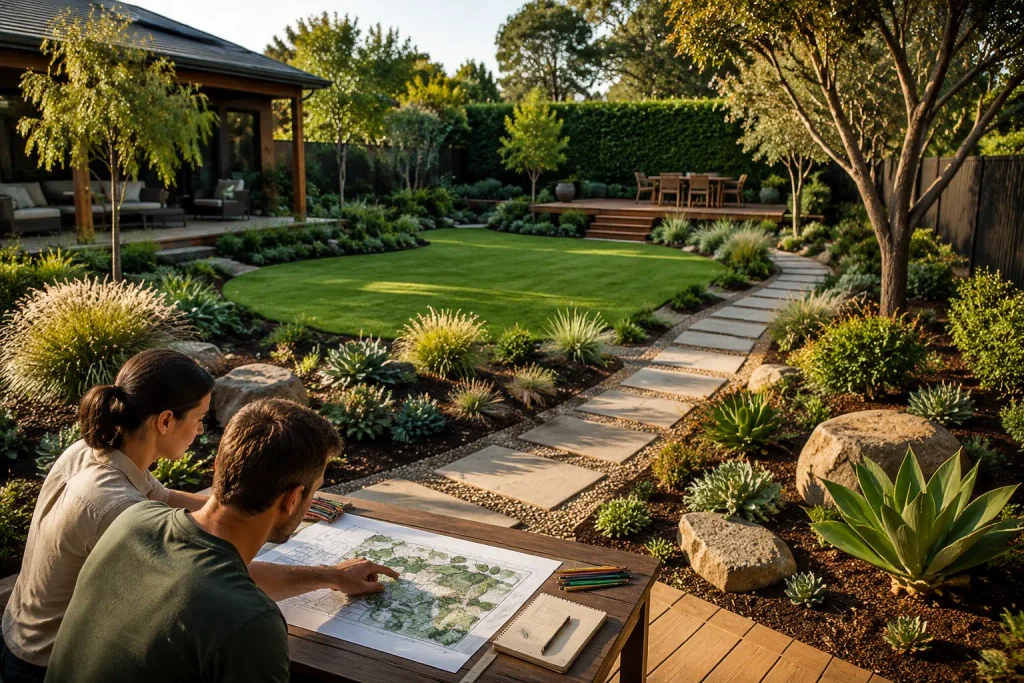
The best landscaping decisions come from thinking ahead. Instead of focusing only on how your yard will look when the work is finished, think about how you want it to look five years from now. This can help you choose materials that still suit your needs as they age.
But remember each material changes in its own way, so your choice will affect both the look of your yard and the work it needs over time. Timber offers warmth but needs regular care to hold up. Similarly, stone develops character over time and often looks better with age. Concrete and pavers stay consistent, though they still fade and wear gradually.
Your soil, drainage, sun exposure, and foot traffic can also affect how well each material performs. Consider these factors alongside the material itself, and then you can tell the difference between normal ageing and signs that something needs attention.
Ready to start planning? Get in touch with our team at Peninsula Compost.