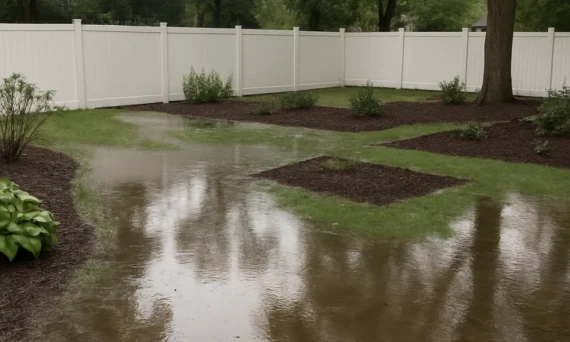
Your New Garden Needs Water, but Where Will the Rain Go? Planning Drainage Before Landscaping
Rain needs a planned route through your new garden before any landscaping begins. Your yard’s slope, soil, and drainage decide where each downpour collects, so sorting them out early can keep water away from your home and planted areas.
Puddles often appear after the plants, paving, and lawn are already finished, which can mean reopening completed areas to install drainage. At Peninsula Compost, we see homeowners face this problem when drainage pipes have to go beneath newly completed garden beds.
This guide walks you through soil behaviour, drain types, and the planning order that keeps water moving. In practice, the cheapest drainage you’ll ever lay is the drainage you lay on bare dirt.
Let’s get into it.
Why Does Water Pool in Some Gardens and Not Others?
Two homes on the same street can drain completely differently because the soil below the turf controls how quickly rainwater soaks into the ground. Once you know how your soil handles water, you may choose a drainage system that addresses the problem properly.
Three things explain most of that difference, and you can check every one of them yourself.
How Soil Type and High Water Tables Affect Garden Drainage
Your soil type affects how quickly rainwater drains and how long puddles remain after rain. For example, sandy soil absorbs water within minutes, while heavy clay holds moisture near the surface for days.
Soil is only part of the picture, as a high water table also slows drainage when the ground already contains plenty of water.
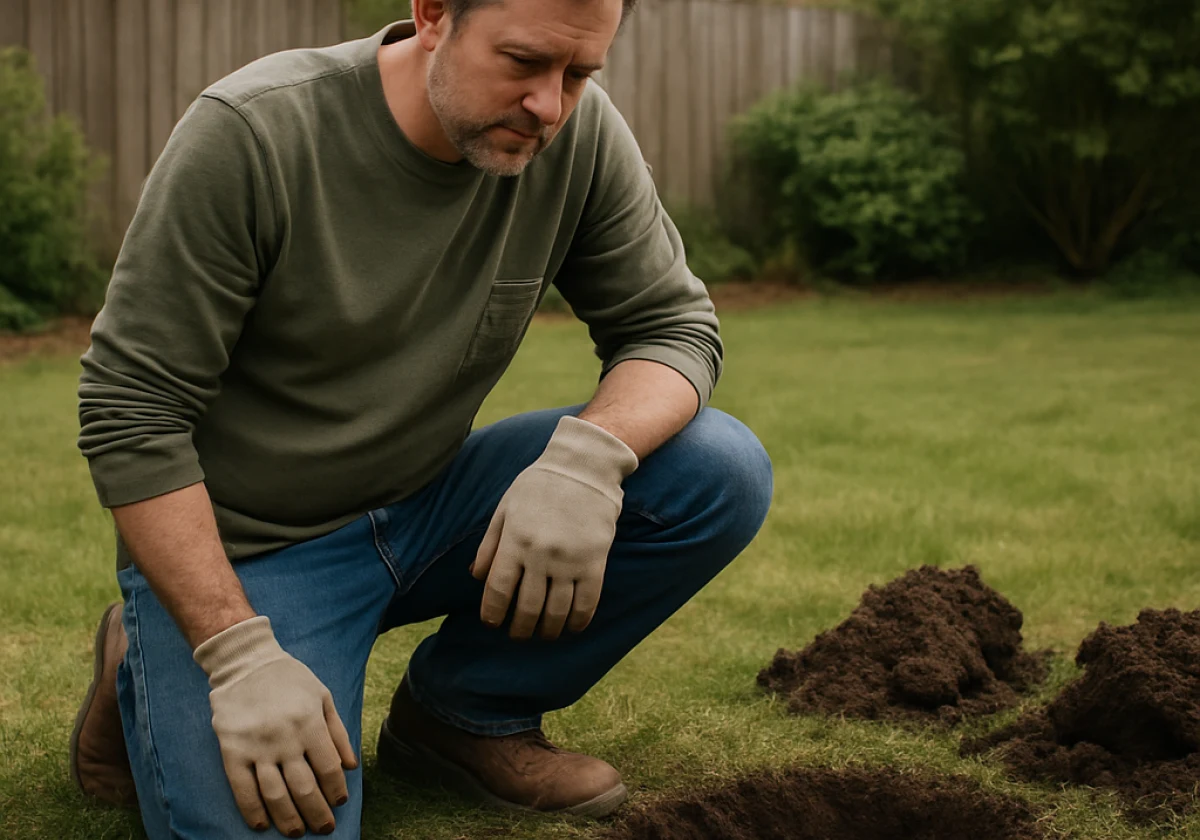
A simple test settles the question: dig a 30 cm hole, fill it with water, and time how fast the level drops. Anything slower than 25 mm an hour tells you the ground needs help (we’ve timed hundreds of these holes).
Signs of Poor Drainage After Heavy Rain
Heavy rain gives you the clearest reading of your property, so walk through the garden soon after a storm and check where water collects. If water remains for over 24 hours, the area may not be draining properly.
Beyond the obvious puddles, look for silt along paths or moss on paving. Grass that turns yellow in the same wet area each winter can also point to poor drainage. Then check your downpipes, because a blockage sometimes sends roof water straight into a garden bed.
After that, peg each wet area and photograph it from the same corner every time. That simple map becomes the brief for whatever drainage system you install later (remember, photos beat memory).
Why New Garden Beds and Retaining Wall Drainage Change Water Movement
New garden beds change water movement because raised soil and hard edging act like small walls running across your yard. Because of this, rain may flow along the bed and gather at its lowest point.
Retaining walls do the same thing on a larger scale, holding back soil and the groundwater pressure sitting behind it. That’s why retaining walls need agricultural pipe and gravel at the base before backfilling. Proper drainage helps prevent water pressure from building behind the wall.
Backyard Drainage Solutions Compared: French Drains, Channel Drains and Surface Grates
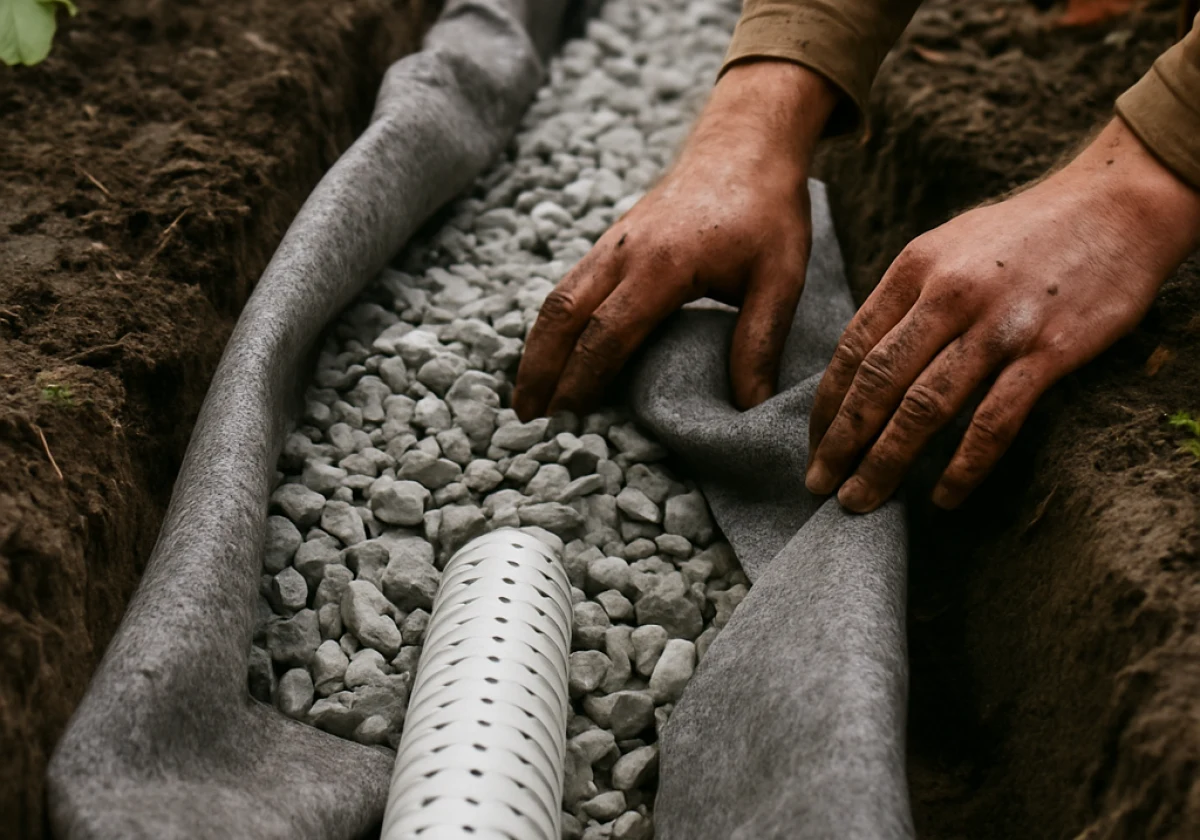
French drains, channel drains, and surface grates each deal with a different type of water problem. A quick comparison will help you choose the right drain for your yard.
| Drain type | Best for | How it works |
|---|---|---|
| French Drain | Soggy lawn and garden beds | Perforated pipe in a gravel-filled trench collects water below the surface |
| Channel drains | Driveways, patios and footpaths | A grated trench drain system catches sheet flow running off hard surfaces |
| Surface grates | Single low spots and downpipes | A catch basin under the grate feeds water into council stormwater systems |
To complicate things, some yards need two types of drains. For example, a channel drain can catch rain running off a patio, while a French drain might remove extra water from the soil nearby.
For underground drainage, geotextile fabric helps keep soil and silt out of the pipe. Otherwise, the pipe might clog and stop draining water properly.
Drainage Planning: Sorting Your Yard Drainage Solutions Before the Landscaping Starts
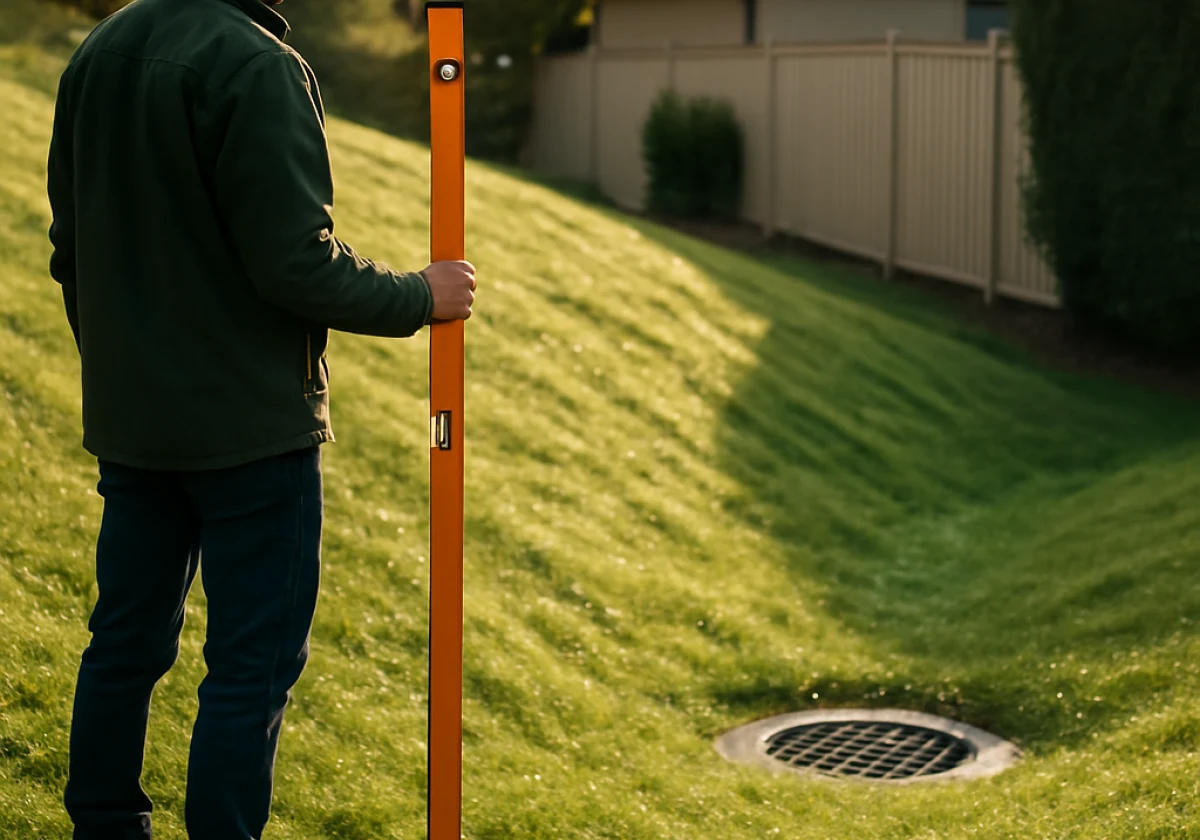
With the drain types covered, planning proper drainage systems first saves you reworking finished garden beds, paths, and retaining walls later. Start by surveying your levels, choosing a discharge point, and planning where the water will drain.
The discharge point comes first in the planning process, because every landscape drainage plan needs somewhere legal for the water to go. Stormwater drainage rules sit with your local council, and many Melbourne blocks connect to stormwater pits or a rainwater tank. Legal discharge points are limited, so confirm yours before you commit to a layout.
Once settled, work backwards up the slope towards the wet areas you pegged earlier. Keep a fall of at least 1 in 100, or 10 mm for every metre of pipe.
Beyond the pipework, surface grading can help as well. Australia’s National Construction Code sets a minimum fall of 50 mm within the first metre of unpaved ground beside a house. Grade the ground towards your discharge line to reduce the water reaching your pipes.
A rain garden or a dry creek bed at the low end swallows the overflow and looks better than a bare grate.
Garden Drainage Problems and the Warning Signs You Can Head Off Early
Now that your drainage plan is almost ready, it helps to know the warning signs of poor drainage and excess water flow. The first signs often appear in your plants, lawn, and brickwork before flooding becomes a problem.
Watch for these five, and act on whichever one you notice first.
- Root Rot in New Plants: Waterlogged soil pushes air out of the root zone. It causes roots to suffocate and shrubs to yellow from the bottom up.
- Mosquitoes Breeding Nearby: Standing water left for several days gives mosquitoes a place to breed near your outdoor space.
- Soil Erosion Along Paths: After heavy rain, strong water flow can strip topsoil from slopes and leave sediment across your footpath.
- Stains on Brickwork: White salt marks near the base of a wall show moisture tracking through the structure.
- Spongy Lawn Underfoot: If grass still squelches days after rain, a high water table or compacted soil may be slowing drainage.
Any one of these on its own stays fixable in a weekend with a shovel and some gravel. Two or more together and you may need a full review of your drainage layout.
Ready to Sort Your Garden Drainage and Water Management? Contact Us Before You Plant
Every downpour finds its own path through your garden, even if you have not planned where the water should go. Planning your drainage early will help you avoid repairs after the turf goes down.
Good garden drainage starts with knowing how water moves through your yard. Plan for it before planting, and you can reduce the risk of water pooling around finished areas.
Peninsula Compost supplies soil, gravel, and practical drainage advice for home gardeners across the Mornington Peninsula. Contact us for a free quote on the materials your drainage system needs, and start the season with ground that drains.